Landmark Athletics TC EXT-3 All-In-One Trainer
Table of Contents
Landmark Athletics TC EXT-3
// Disclosure: links use go.ironclinicgym.com — my custom affiliate tracking. I may earn a commission at no cost to you. This never influences my ratings.
The Landmark Athletics EXT-3 brought dual 200lb cable stacks, Smith machine, landmine, lat pulldown, and leg work into one footprint. After 90 days of testing, it's the machine that makes the all-in-one category actually work. The structural engineering is solid. The cable systems are reliable. Yes, it has quirks: the lever arms need aftermarket adapters to shine, the lat pulldown won't give full ROM if you're tall, and the weight horns are slippery. But those are edge cases. For anyone wanting everything in one piece without assembly headaches, this is the answer.
Pros
- Dual 200lb cable stacks with 1:1 and 2:1 pulley ratios give real weight range across 200 pounds and match movement needs from heavy compounds to light isolation work.
- Smith machine runs smooth and quiet with safety catches on both sides and no slop in the rails.
- Well-written assembly manual with organized hardware packets makes 4-hour setup manageable for one person with standard tools.
- Included landmine attachment is well-executed with bolt-through anchoring and full rotation for all standard movements.
- Leg extension/curl attachment has minimal footprint and works with any standard bench.
Cons
- Lever arms lack fixed angle locks, making pressing movements awkward without aftermarket adapters like Vendetta or Kaizen.
- 84-inch rack height with cables stopping at 75 inches creates clearance issues for lifters over 6 feet tall during lat pulldown at full extension.
- Plastic-coated weight horns are too slippery and require barbell collars on every post to prevent plates from sliding off during normal vibrations.
- BikeEGR cardio unit is loud enough to carry two floors and monitor shipped stuck in metric with no option to switch to imperial.
- Storage is not fully optimized; some attachments don't have dedicated homes and several end up on the floor.
Introduction
Most all-in-one gym machines fall into one of two camps: they’re either brilliant pieces of engineering that save space and unlock serious training potential, or they’re glorified coat racks with a pulley attached. The only real way to find out which one you’re dealing with is to buy it, watch FedEx do their worst, and then use it hard enough to expose every weakness. I spent the last 90 days doing exactly that with the Landmark Athletics EXT-3. This machine brings dual 200lb cable stacks, 1:1 and 2:1 pulley ratios, a Smith machine, lever arms, dip bars, landmine attachment, leg press, lat pulldown, and leg curl/extension capability. It occupies roughly 10 by 8 feet of floor space. On paper it promises to replace your entire gym. In practice, the question is whether it actually delivers.
First Look
The EXT-3 showed up in excellent condition despite shipping a machine of this size and weight. Assembly took roughly 4 hours, mostly because that’s how long these builds need. The manual is detailed and well-organized. Each hardware packet is labeled for its assembly step, which eliminates the guessing game. The only assembly friction came from aligning the Smith machine bar into its trolleys, but that was awkward rather than difficult. Once installed, the bar runs smooth and quiet through the rails with no perceptible slop. The frame is substantial and doesn’t flex or rattle under loaded movement. The welds are clean. The powder coat finish is excellent. Everything feels like it belongs at this price point. The machine uses standard 2-inch holes throughout for attachment compatibility, which matters if you plan to add aftermarket accessories down the road.
Build Quality
The structural engineering here is solid. When you spend this much money, you’re paying for durability and consistency across every component, and Landmark delivered. The dual 200lb cable stacks are the centerpiece. Both 1:1 and 2:1 pulley configurations are available depending on setup. On 1:1, selected weight equals actual weight lifted. On 2:1, you’re pulling half the selected weight, which extends your effective range across 200 pounds and matters for isolation movements where you need lighter loads. The cables themselves are braided and don’t show fraying or stretch after 90 days of daily use. They route through stainless steel eyelets and run to 75 inches on the main stack. Externally routed rather than through the uprights, which occasionally means bumping a bench or plate into the bracket. Bending that bracket would be a real problem, but the pulleys themselves are commercial-grade and designed to last. The Smith machine bar is 45 pounds with a knurled grip and safety catches on both sides, which is standard and solid. The included dip bars are welded at a fixed angle and handle both dips and assistance work without flexing. The dual cable curl bar has built-in bearings and multiple grip angles for arm work. The landmine attachment anchors at the corner with a bolt-through design and handles full rotation for all standard movements. The leg extension/curl piece is genuinely clever: tiny footprint, works with any standard bench, and wheels away when done. What I wish: it could lock vertically for storage.
Setup and Installation
Assembly came in at roughly 4 hours for one person, which is standard for machines this size. The machine itself weighs approximately 1200 pounds, so delivery logistics matter. I had it placed in my garage, and it arrived in perfect condition, though you’ll want to inspect on arrival. The manual is genuinely well-written, with prepackaged hardware labeled by step. No guessing which bolt goes where. The Smith machine bar alignment required some patience but moved smoothly once installed. The frame itself required no adjustment or shimming. The foot design is solid with wide contact points and rubber pads that won’t slide on concrete or garage flooring. All cable attachment points are pre-drilled and aligned. What to know: you need floor space. This isn’t subtle. The machine is roughly 10 feet wide by 8 feet deep. The dual cable configuration means you’re working with width as well as depth. Plan accordingly. The lat pulldown seat is all metal with polished aluminum accents and built-in extension cable, seat pads, and leg attachment. Setup is straightforward. If you’re assembling solo, budget the full afternoon.
Performance
The cable systems perform consistently across workouts. The braided cables stay supple and don’t bind or fray. The pulleys are quiet, smooth, and track true. I tested both ratios across upper and lower body movements for 90 days, and the weight selection stayed consistent without drift. The Smith machine bar moves without friction and the safety catches engage cleanly. The 2:1 ratio shines for isolation work: leg extensions, leg curls, tricep pushdowns, and lat pulldowns where you want lighter resistance and higher rep ranges. The 1:1 ratio handles everything else with full weight selection.
The lever arms attach easily but have a significant limitation: no fixed starting angle. You can’t lock them at 30, 45, or 90 degrees, which makes pressing movements awkward unless you’re doing standing rows or deadlifts where weight hangs naturally. With aftermarket adapters from vendors like Vendetta or Kaizen, this becomes usable for fixed-angle pressing. Without them, most people won’t use them much. The dip bars are solid and don’t flex under bodyweight or additional load. The landmine rotates smoothly and anchors solidly through every movement.
The lat pulldown works well for most users, but here’s the limitation for tall lifters: the 84-inch rack height with cables stopping at 75 inches creates clearance issues. I’m 6’1”, and the pulldown extension brings you to 82 inches total, which isn’t quite enough for a full lat stretch at maximum extension. I end up leaning back slightly to compensate. A workaround is adding plates to the end of the cable for a few more inches of ROM. One equipment concern worth flagging: the weight horns use plastic-coated posts that are too slippery. Plates slide off from normal vibrations unless you use barbell collars on every post, including storage horns. Landmark included collars for all posts plus extras, which suggests they know about this. The collar requirement feels like a patch for a design oversight.
Versatility
The machine covers most movement patterns you’d train: pressing, rowing, leg work, and isolation movements all fit the footprint. The leg curl/extension attachment works with any standard bench. The landmine handles rotational and explosive work like Meadows rows, landmine presses, and rotational chops. The lever arms would be better with locked angles, but they work for rowing movements where the weight hangs. The Smith machine functions well for pressing and safety bar work. The dip bars handle weighted dips and assistance work. The dual cable stacks handle single-arm movements, compound cable work, and heavy unilateral training. For someone trying to avoid buying five separate pieces, the versatility is genuine. You’re trading off pure simplicity for real functionality.
Value
At this price point, you’re choosing between an all-in-one machine and a quality 3x3 rack plus separate components. A 3x3 from Rogue, Rep, or Titan saves money upfront but requires multiple purchases and assembly. The EXT-3 gives you everything in one footprint, and it doesn’t cut corners on the things that matter. The affiliate link saves $150 off the purchase price. You’re not outgrowing this machine. You’re not breaking it. You’re getting professional-grade cable systems, a functional Smith machine, and legitimate leg work attachments. That’s the value proposition.
Who Is This For?
This machine suits home gym owners who want true all-in-one functionality without buying and assembling multiple pieces. It’s for people with 10 by 8 feet of available space, a budget that accommodates this price range, and a genuine commitment to training regularly. It works well for compound movements, isolation work, and the kind of training that needs both pressing and pulling in the same session. If you’re under 6 feet tall, the lat pulldown clears easily. If you’re over 6 feet, you’ll need to plan for the ROM workaround. It’s genuinely ideal for someone building out their first serious home gym and doesn’t want to commit to multiple separate purchases over time.
Final Verdict
The Landmark Athletics EXT-3 genuinely challenges the jack-of-all-trades narrative that kills most all-in-one machines. The structural engineering is solid. The cable systems are reliable and perform consistently. The included attachments work as designed. Yes, the lever arms have limitations, the lat pulldown won’t give you full ROM if you’re tall, and the weight horns need collars. But those are edge cases. The frame is built to last. The Smith machine is usable. The cable stacks are smooth and consistent. For anyone with the space and budget who wants everything in one piece without assembly headaches, this is the answer. Landmark didn’t just make another all-in-one trainer. They made one that you’ll actually want to train on.
Keep Reading

LionsCool Seated Curl Extension Machine Review
A rare, budget-friendly seated leg extension and curl machine with a consistent cam-pulley feel and one visible lever-arm flex.
Temple of Gainz Quadsend Review
The $4,200 Quadsend is the best-built leg press hack squat combo for home gyms, period.
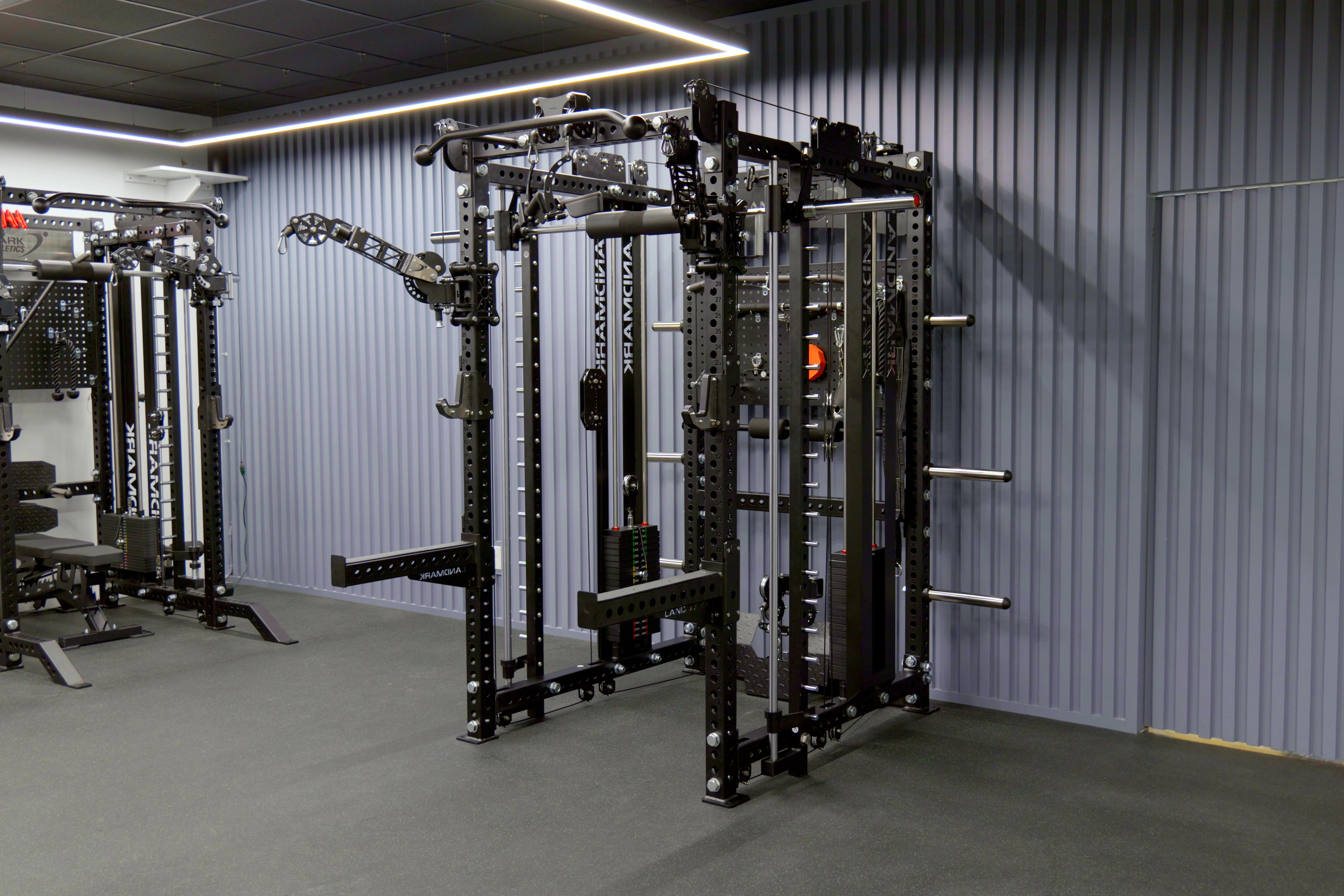
Landmark Athletics Everest All-In-One Trainer
The Everest is a complete, no-compromise all-in-one trainer built for lifters who want commercial-grade quality at home.

Mikolo Anubis 2.0 Ultimate Edition
The Anubis 2.0 fixes every real problem from the original and delivers a rack, cable machine, and Smith machine in one.
Mikolo Anubis + Bastet: An Almost Perfect $2,000 Home Gym Package
The Anubis and Bastet deliver impressive build quality and a compact all-in-one system, but the 2:1 cable ratio and missing UHMW protection are real limitations at this price.