GMWD Pendulum Squat Review
Table of Contents
GMWD Pendulum Squat PS01
// Disclosure: links use go.ironclinicgym.com — my custom affiliate tracking. I may earn a commission at no cost to you. This never influences my ratings.
The GMWD Pendulum Squat PS01 is the rare dedicated pendulum squat built for a home gym, listing at $1,199.99 and often selling near $900 when comparable pendulum machines run $2,000 to $3,500. It delivers a deep, spine-friendly, quad-dominant range of motion in a compact 62-inch footprint and stays rock solid under load despite bolt-together construction. It only does one movement and the footplate could grip better, but as a leg-day accessory it is an S-tier pattern at a category-low price.
Pros
- Deep, quad-dominant range of motion that runs well past parallel. At a 400-plus-pound barbell squat, 100 to 150 pounds here is enough to torch the quads.
- Spine-friendly loading. Pressing into the flat 2.4-inch back pad keeps the spine neutral so the lower back stays quiet, even on cold-start winter workouts.
- Compact for the category at a roughly 62 by 43-inch usable footprint, thanks to a built-in spring counterbalance instead of a second weight horn.
- Deceptively stable. Bolt-together construction that does not budge under load, even parked on a cracked garage slab.
- Loads on a single weight horn with zero balance issues, so it can sit flush against a wall to save floor space.
Cons
- It does one movement only. No calf raises, no leg press, no secondary patterns, just the pendulum squat.
- The bare diamond-plate footplate turns slick with sweat or dust and needs textured paint or a rubber cover for a swinging movement.
- Back and shoulder padding is good but not premium, firm rather than plush.
- Load still runs through the shoulders, so it does not unload the spine the way a belt squat does.
- A poor first or only leg machine. It is a specialized accessory, so a barbell and rack should come first.
Introduction
The GMWD Pendulum Squat PS01 is a plate-loaded pendulum squat machine, and it is one of the only dedicated pendulum squats built and priced for a home gym. It lists at $1,199.99, frequently sells closer to $900, and lands in a category where the next real options run $2,000 to $3,500. I ran it in the Iron Clinic for a couple of months as a leg-day accessory, through cold winter workouts on a cracked garage slab, and it earned its footprint.
A pendulum squat is a quad-dominant, deep-range movement. It is specialized, but not in a way you have to learn. The motion is natural enough that one or two sets in you understand it, and it is humbling. I squat over 400 pounds with a barbell and use 100 to 150 pounds on this machine at most. It still torches my quads.
This is a field review, not a lab teardown. I did not put a crane scale on the loaded carriage. What follows is how the machine actually trains, where it holds up, where it falls short, and who should buy it.
Build Quality
The build punches above its bolt-together construction. This is not a welded assembly, and at $899 it does not pretend to be, but under load it behaves like one. GMWD says it upgraded the weld at the backrest support and added a reinforcement plate there. In a couple of months of hard sets, I never heard a creak or felt any flex.
Stability is the standout. My gym sits on a cracked foundation, and this machine is parked in the literal worst spot for it. It does not budge. It is not bulletproof, and there are pendulum squats out there that are more rock solid, but they cost two to five times as much. For a simple frame at this price, the rigidity is deceptive.
GMWD rates the frame to an 800-pound capacity and backs it with a lifetime structural warranty, though parts are covered for only six months. One honest caveat belongs here. Pendulum squats do not ask for much weight, so I have never run more than 150 pounds on it and cannot speak to how the bolt-together frame behaves near that ceiling. For how the machine is meant to be used, light plates in the hypertrophy range, it has been rock solid. A stronger lifter who plans to load it heavy should weigh that bolt-together build against welded machines that cost several times more.
The padding is good, not premium. The back pad runs 2.4 inches thick, firm without being hard, which matters here because you press into it to hold a neutral spine while it supports your shoulders. It holds you without digging in.
The footplate is where I want more. It is large, 23.6 by 24 inches, with three angle positions at 30, 35, and 40 degrees, so foot placement is flexible. The problem is the surface. It is bare diamond-plate steel, and diamond plate has never cut it for me. Get a little sweaty or let some garage dust settle and it turns slick, which is exactly what you do not want on a swinging movement. After being spoiled by the textured paint on the Powertec hack squat, I want the same here, or at minimum a rubber footplate cover. Extra grip on a pattern like this buys confidence.
Assembly
This is a bolt-together machine, not a welded frame that ships in one piece, so plan for an afternoon of assembly with a standard metric socket set. At 287 pounds shipped, the final stand-up is easier with a second person or a set of mover’s dollies if you need to move it around, but truly this is one of the easier pieces I have built. Nothing crazy to report here, even with the giant pendulum arm and its anchor.
Performance
The pendulum squat is the whole point of this machine, and it delivers a consistent, brutal, quad-dominant stimulus. Think of it as a hack squat that took everything you love or hate about hack squats, married it to a sissy squat, and turned the quad dominance from an 11 to a 15. You are swinging through an arc, so the pattern is different, but like a hack squat you still get hamstring involvement. It is just far less dominant than a barbell back squat. The quads run the show.
How deep can you go?
Deep, and then deeper. The range of motion is genuinely surprising. There is a bump stop at the bottom that acts as a safety so you are never stuck under the carriage if you bail, and even at my depth it can travel well below where I use it. You are not going ass to grass on this machine. You are going subterranean if you want to. For any body type or height, that headroom means the machine will not run out of range before you do. At 6 foot 1, I have room to spare, and GMWD lists a fit range from 4 foot 11 up to nearly 6 foot 3.
How does it treat your body?
It is easy on the body in the ways that count. It is not a belt squat, where the load lifts off your spine entirely, because you are still loading through the shoulders and there is real spinal compression, same as a hack squat or a barbell squat. What it does well is let you push hard into that long, flat back pad and hold a neutral spine, so the weight travels through your legs and the lower back stays quiet. I have started workouts on it completely cold, in the dead of winter, with none of the nagging you would feel diving into a heavy barbell squat. I keep the reps in the 10 to 15 hypertrophy range and never go heavy. It is plenty.
The Spring Counterbalance
The spring counterbalance is what makes this machine work in a home gym. The carriage is a heavy unit on its own, so GMWD uses springs at the back to bring the felt load close to zero when no plates are on the horns, the same idea as counterbalancing a Smith machine. It is not assisting your working sets the way people assume. It is making the empty carriage manageable so you do not have to load over 100 pounds simply to get moving. GMWD rates the unloaded machine at 33 pounds of starting resistance, and that feels about right, not near-weightless, but light enough for any lifter to start.
Where the springs do help is out of the hole. In the deepest part of the movement they give a little assistance, and I have found that useful rather than distracting. The load feels consistent all the way through the range, including the eccentric, which makes it easy to push a set to true failure. If you do not like the springs, they come off, and you can swap in bands if you prefer. I never bothered. It feels natural as shipped.
Footprint and Placement
For the category, this is a compact machine. The usable footprint is roughly 62 inches long by 43 inches wide, and GMWD lists an overall length of 77 inches once you account for the rear weight horn, which projects about as far back as the stabilizer feet. Most pendulum squats carry a second set of weight horns on the opposite end and balloon the footprint. This one does not, largely because the counterbalance is built in with those springs.
The single weight horn also changed how I use it. I have loaded plates on one side only for basically the entire time I have owned it, with zero balance issues, and it feels great that way. Because the loaded horn sits within the rear stabilizer footprint, I can push the whole machine flush against a wall and reclaim the space. If you are tight on room, mark the rectangle with painter’s tape before assembly, give yourself about six extra inches at the back for plate clearance, and you will know exactly what you are working with. It is not light, but one person can move it, ideally on a set of heavy-duty mover’s dollies.
Versatility
This is the honest limitation. The machine does one thing. It is a pendulum squat and nothing else, no calf raises, no leg press, no adjustable secondary patterns. The only real flexibility is on the counterbalance, where you can pull the springs or run bands. If you want a machine that covers multiple leg-day jobs, this is not it, and a hack squat leg press combo will serve you better.
What you get in exchange for that narrowness is one of the best lower-body movement patterns there is. As a single-purpose tool, the pendulum squat is S-tier for quad development. You are trading versatility for a movement you will actually look forward to.
Value
At a list of $1,199.99 and a street price often closer to $900, the GMWD Pendulum Squat is filling a real gap. Dedicated pendulum squats are a thin market, and very few of them compete with this one at this price. The pendulum options that do exist tend to jump to commercial territory, like the BodyKore CF8137 at roughly $3,500, which is more rock solid but four times the money and much larger. As a pendulum squat built for a home gym budget, this one stands nearly alone.
Is it worth the price?
For what it is, yes. If you want the pendulum squat pattern at home and you do not want to spend three or four thousand dollars, this is the machine. The alternatives most buyers actually cross-shop are not pendulum squats at all. They are home gym leg machines that do more jobs for more money, worth considering for versatility but not as pendulum substitutes. GMWD’s own Arete 3-in-1 runs $1,199.99 on sale and adds leg press, hack squat, and calf raises. The Powertec leg press hack squat sits around $1,583 to $1,800, the Legion LPHS is $2,199, and the QuadSend runs about $4,200. Each buys versatility, including calf raises this machine cannot do. None of them buys you the pendulum squat.
Who Is This For?
This is for the lifter who already has the basics and wants a serious quad-focused accessory. If you have a barbell and a rack and you are looking for a leg-day tool that hammers your quads without hammering your lower back, this belongs on your list.
It is not for the person building a gym from scratch. If you do not own a barbell or a squat rack yet, start there. You will get far more versatility from that purchase, and you will be able to do the barbell squats that should anchor your training. The pendulum squat is a complement to that work, not a replacement for it. It also is not for anyone who needs one machine to cover calves, presses, and squats, because it does exactly one movement.
Final Verdict
The GMWD Pendulum Squat PS01 does one thing and does it at a price nobody else in the category matches. It is compact, deceptively stable, easy on the lower back, and it produces an S-tier quad stimulus with weight so light it will humble you. The footplate should grip better and it will only ever be an accessory, but neither of those changes what you are getting. For a home gym owner who wants the pendulum squat pattern without a commercial-gym budget, there is almost nothing else at this price that does it. Check current pricing with code IRONCLINIC at GMWD.
Keep Reading

LionsCool Seated Curl Extension Machine Review
A rare, budget-friendly seated leg extension and curl machine with a consistent cam-pulley feel and one visible lever-arm flex.
Temple of Gainz Quadsend Review
The $4,200 Quadsend is the best-built leg press hack squat combo for home gyms, period.
Landmark Athletics Everest All-In-One Trainer
The Everest is a complete, no-compromise all-in-one trainer built for lifters who want commercial-grade quality at home.
GMWD Arete Leg Press Hack Squat Combo Review
The GMWD Arete combines hack squat, leg press, and calf raise into a single 1,000 lb capacity machine that delivers genuine versatility without compromising movement quality.
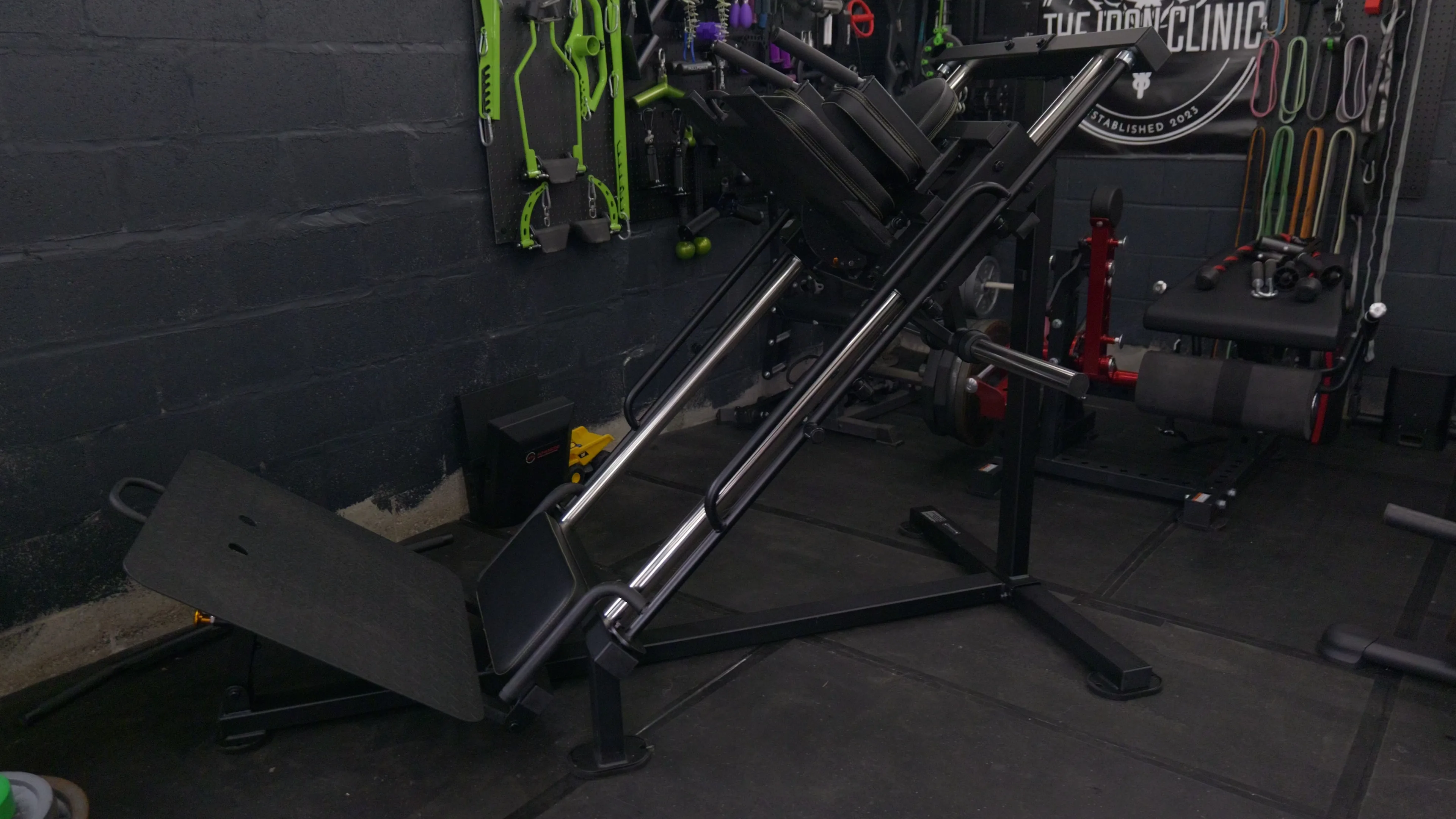
Powertec Leg Press Hack Squat Combo Review
The Powertec Leg Press Hack Squat Combo reviewed after 60 days: build quality and value at $1,583.
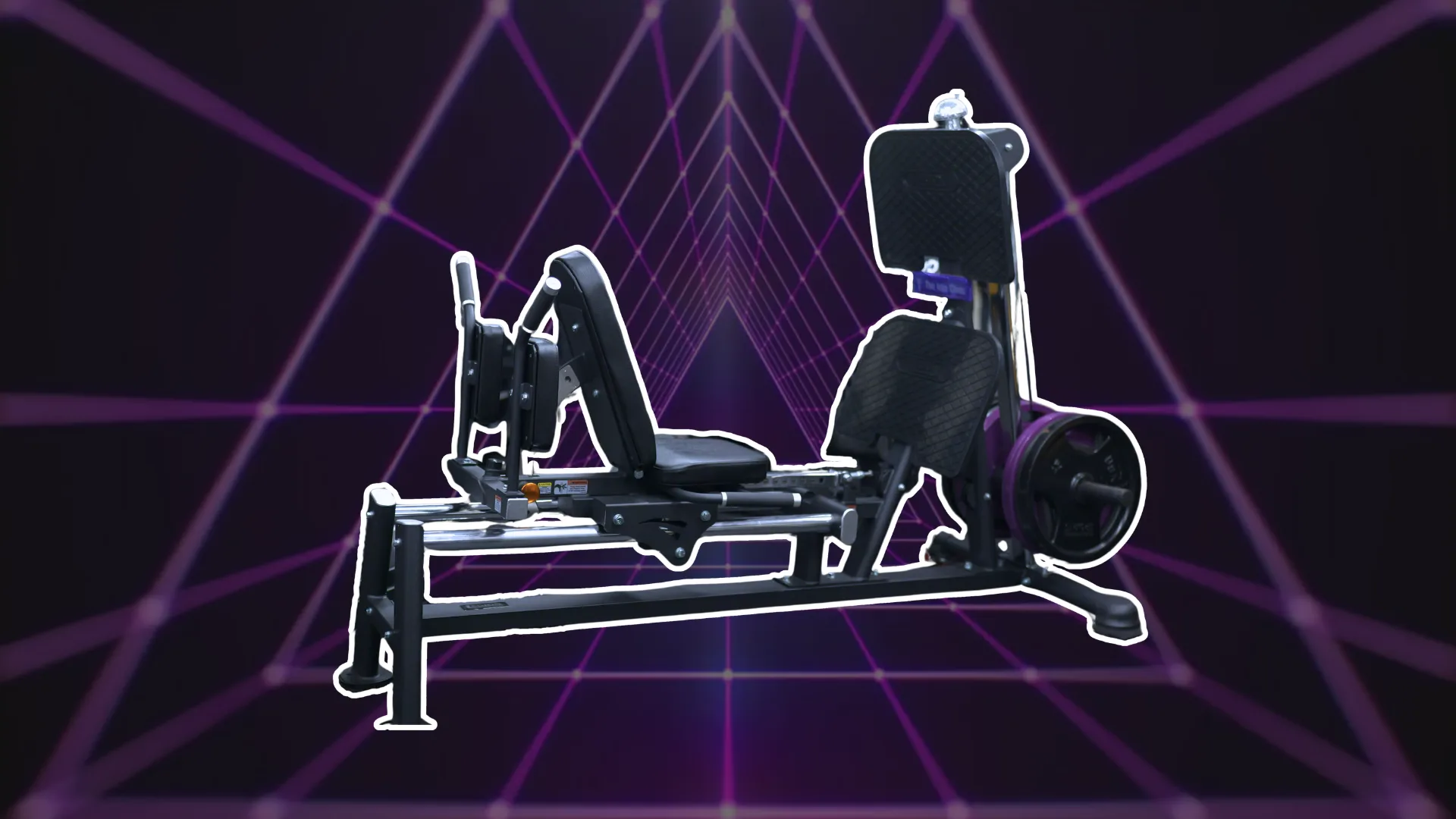
Legion LPHS Horizontal Leg Press Hack Squat
Commercial build, 1:1 ratio, fits where standard machines won't. The only horizontal leg press hack squat in its class.