Temple of Gainz Quadsend Review
Table of Contents
- Introduction
- First Look
- Build Quality
- Setup & Installation
- Performance
- Does the range of motion actually hold up?
- Versatility
- What the Leg Press Sled back pad angles actually do
- Value
- Is this actually worth it compared to the other leg press hack squats I have reviewed?
- Who Is This For?
- Final Verdict
- Comments
Temple of Gainz Quadsend
// Disclosure: links use go.ironclinicgym.com — my custom affiliate tracking. I may earn a commission at no cost to you. This never influences my ratings.
The Temple of Gainz Quadsend is the best leg press hack squat combo machine available for home gyms. After three months of heavy use, the 37.5-degree angle, commercial-grade build quality, and unmatched range of motion justify the $4,199.99 price for serious lifters who have already built out the rest of their gym.
Pros
- 11-gauge commercial steel with knurled aluminum handles, magnetic pins, and laser-engraved brackets at a build quality level no other home gym leg machine matches
- 37.5-degree angle delivers roughly 61% effective weight, splitting the difference between 30-degree and 45-degree machines for strong quad recruitment without excess knee stress
- Deepest range of motion of any combo machine tested, with 36-inch-wide hack squat footplates enabling stance variety that smaller machines physically cannot allow
- Leg Press Sled attachment meaningfully shifts muscle recruitment across 10 back pad positions, adding genuine training versatility beyond the standard two movements
- Customer support includes engineer video calls during assembly, backed by a 10-year frame warranty and a founder who personally signs shipping crates
Cons
- Pad vinyl quality does not match the rest of the machine's premium build, despite dense and comfortable foam underneath
- Starting trolley weight of 123 lbs (181 lbs with LPS) may be too heavy for lighter lifters, those rehabbing, or beginners
- Safety handles in hack squat mode require reaching for shorter users; $10 3D-printed spacer from Temple of Gainz addresses this but should ship standard
- Largest footprint of any home gym leg press hack squat combo tested at the Iron Clinic, requiring careful space planning before purchase
- Included D-ring handles for the chain attachment point are cheap plastic stock parts completely out of character with the rest of the machine
Introduction
The Temple of Gainz Quadsend is a plate-loaded, 37.5-degree leg press and hack squat combo machine built by Temple of Gainz, a company that funded this exact machine through a Kickstarter campaign that raised over $550,000, a record for the largest fitness equipment machine launch in the platform’s history. It retails for $4,199.99 with free curbside freight shipping, and the optional Leg Press Sled attachment (the LPS) runs roughly $500 more. I have trained on it nearly every leg day since mid-April, over 90 days and counting, and my verdict, stated plainly before I walk you through why: this is the single most well-built machine I have ever put my hands on, in any equipment category, and I recommend it without reservation to the buyer it is built for.
That buyer is narrow. This is a $4,200 leg machine, and there is no home gym competitor within shouting distance of that price. The closest thing is commercial-grade equipment. That is not a marketing line, it is the actual state of the market. Temple of Gainz spent two and a half years developing the Quadsend, went through three full prototype revisions, and built it around 11-gauge steel and four linear bearings riding solid steel guide rods. The company has said there will never be a version two of this machine, because in their words, this is V100. After three months of near-daily use, I understand why they would say that.
What follows is everything I found: the build, the 37.5-degree angle and what it actually does to your training, every feature worth knowing about including one attachment other reviewers got wrong, where this sits against the other combo machines I have tested, and exactly who should and should not spend this kind of money on a leg day machine.
First Look
The Quadsend arrived in the largest crate I have ever received, packed with a level of care that told me everything about this company before I ever touched the machine itself. The freight carrier could not have accepted a larger package. The crate had mere inches to spare on the truck bed, which meant the delivery required some of the most skillful unloading I have ever watched happen in my driveway. Inside, every component was hand-packed, and mine came with something extra: Yoni, the founder of Temple of Gainz, was personally in the warehouse packing and signing crates for early backers, and he wrote “The Iron Clinic” on the side of mine in Sharpie. It also came with stickers, a shirt, and a flag, the same backer package every original Kickstarter supporter received. When the founder of a company is personally in the warehouse signing boxes, that tells you something real about how much this project means to the people who built it.
Assembly took me roughly six hours working completely solo. Other reviewers flagged the build as complex, and I understand the impression. This is a big machine with heavy components. But I did not find it more complex than plenty of other equipment I have assembled at the Iron Clinic, some of it with far worse instructions. If you follow the manual and, ideally, have a second person helping, I do not think you would run into a single issue. The instructions themselves deserve their own callout. You get the standard technical drawings with every callout and label you would expect from high-end gym equipment. Then you also get what amounts to a personal walkthrough from Yoni, written in plain language, coaching you through the build like a friend, complete with real photos of his own team assembling the machine. The manual runs about 150 pages and gets updated digitally on a continuous basis. During my build I hit one point where I was unsure about the bearing installation and how hard I could push on the guide rods. I called Temple of Gainz, got their engineer on a video call, and he walked me through it live with zero hesitation. I hung up, realized fifteen seconds later I had another question, called back, and he just answered it, happy to help again.
Every touchpoint on this machine stood out immediately during assembly: the knurled aluminum handles, the magnetic adjustment pins holding everything in place, the laser-engraved brackets, the way the footplate adjusts up and down and locks in with a mag pin, the folding backrest pad that tucks out of the way with one hand when you switch from leg press to hack squat mode. None of it is groundbreaking engineering in isolation. It is that every single detail is executed at a level I have not seen matched anywhere else, on any machine, in any category. The one thing that genuinely surprised me was the sheer size of it, and I had already used a Quadsend in person at HomeGymCon 2025. Even knowing what was coming, the scale of every component (the weight horns, the trolley horns, the footplate) still caught me off guard.
Build Quality
The marketing on this machine matches the reality, which is rare enough that it is worth stating directly. This is the most premium machine I have encountered across every category I have reviewed, not just leg press hack squat combos. It is built on 11-gauge steel with four linear bearings on solid steel guide rods, and the total machine weighs over 700 pounds. After roughly three months of heavy use, nearly every leg day, I have zero wear and tear to report. No scratches, no loosening, no squeaks, no rattles, no drift. The powder coat has held up completely fine, nothing to flag there. Temple of Gainz backs the frame with a 10-year warranty, the pivot bearings with a 5-year warranty, and the upholstery, cables, springs, and grips with a 1-year warranty, which tells you where the company expects wear to eventually show up and where it does not.
There is exactly one flaw worth naming, and it is small enough that I laughed out loud when I found it. The Quadsend ships with a dedicated anchor point for D-ring handles at the leg press chain attachment, which is a genuinely excellent feature. Most machines force you to jerry-rig a handle onto whatever you can find. But the actual handles that ship with it are stock, flimsy plastic, the kind of thing that feels like it came from a bargain bin. They are so out of character with the rest of the machine that I stopped unpacking to laugh, assuming for a second they belonged to a different order. This is not a dealbreaker in any sense. It is a five-dollar accessory on a $4,200 machine, and it is the only component on the entire unit that does not match the quality bar everywhere else.
The second point, and I will say this even though it costs me nothing to stay quiet about it: the pad vinyl is not at the same tier as the rest of the machine. The foam underneath is dense and comfortable, but the covering itself leaves a little to be desired on a machine at this level, especially with companies like GMWD shipping premium upgraded vinyl on their newer releases. It is not bad vinyl. It is not the cheapest I have used. It is simply the one place on this machine where the quality bar dips slightly below everything surrounding it. Everything else (the footplate design, the mag pins, the band peg system, the knurling on every handle) holds up to the closest inspection I can give it.
Setup & Installation
Getting the Quadsend into position is its own project, separate from assembly, and it deserves its own planning. The trolley alone weighs roughly 123 pounds without the LPS attached and about 181 pounds with it, and that is before you factor in the size of the base frame and footplate assembly. I got the machine up onto heavy-duty moving dollies, which I recommend to anyone handling equipment this heavy, and used three or four of them at different points depending on what I was doing: positioning it initially, then leveling it, then shifting it into its final spot. Leveling a machine this size matters, and the dollies made that process manageable working alone.
Once assembled, maintenance is genuinely simple and centers entirely on the guide rods that the trolley bearings ride on. During assembly I cleaned the rods thoroughly with Simple Green and a clean microfiber towel, wiped them dry, then lubricated them with a standard metal lubricant before installing the bearings. Going forward, that is the entire maintenance routine: keep the guide rods clean, keep them lubricated, and this machine will not fail you. Those rods and bearings are the only parts on the Quadsend that see meaningful wear over time, and a few minutes of attention every so often is enough to keep them in the same condition as day one.
One planning note that matters more than people expect: this machine takes up serious floor space, more than any other leg press hack squat combo I have had at the Iron Clinic. Before you order, grab a roll of painter’s tape and lay out the actual footprint on your gym floor, then add another two feet around it so you can comfortably walk around it and load plates without bumping into anything. I underestimated this even after having used a Quadsend in person before mine arrived, and I would rather you plan for it than get surprised the way I nearly was.
Performance
The 37.5-degree sled angle is the headline spec on this machine, and it earns that billing. Most home gym leg press hack squat combos sit at either 30 or 45 degrees, with the bulk of the market clustering around 45. At 30 degrees, you are pressing roughly 50 percent of the loaded weight against gravity, which is gentler on the knees and tends to bias the movement toward the quads. At 45 degrees, you are pressing roughly 71 percent of the loaded weight, which recruits more glute and hamstring but can be harder on the knees, particularly at depth. The Quadsend sits at 37.5 degrees, which works out to roughly 61 percent of your loaded weight translating into resistance. In practice, that means more effective resistance per plate than a 30-degree machine while staying easier on the joints than a 45. After three months, I think Temple of Gainz landed on the right compromise. It is noticeable, especially if you get the chance to compare it side by side against other angles, and it has been one of the easier machines on my knees that I have used, in part because of how low it lets you go without ever feeling unsafe.
Does the range of motion actually hold up?
Yes, and by a wide margin. I have never come close to bottoming out on this machine in any position: leg press, LPS, or hack squat. It ships with two depth stoppers, letting you set either a high safety stop or a genuinely low one, and I have only ever needed the long setting. Combine that with a hack squat footplate that measures 36 inches wide and you get room to set your stance and depth in ways that smaller machines simply will not physically allow. This is a large machine, and the size is not decoration. It is what buys you that range.
For anyone looking for the exact spec, the lower footplate used for hack squats is hydraulic-assisted and adjusts beautifully across roughly eight angle settings that span from about 42 degrees at the shallowest to 60 degrees at the steepest, with stops falling around 44, 47, 50, 52, and 55 degrees in between. The hydraulic assist is what makes moving between those angles effortless, and that spread is a big part of why the hack squat feels dialed in no matter how upright or aggressive you want your stance to sit.
The Quadsend is not the quietest machine on the market, and I want to be direct about why. The trolley rides on ball bearings along the guide rods, and ball bearings are inherently louder than the roller-style systems you will find on machines like the Legion LPHS or the RitFit Gazelle. This is not a grinding noise, not a defect, not something that concerned me at any point in three months of near-daily use. It is the sound of well-lubricated bearings doing their job on a machine built to outlast most things in your gym. On the safety side, the auto-disengaging safeties work well, but if you are on the shorter side, reaching them in hack squat mode can be a genuine stretch. Temple of Gainz sells a 3D-printed spacer for about $10 shipped that brings the handles closer, and I think that is worth buying if you have shorter limbs. This is a real safety consideration, not a nitpick, since anyone who is exhausted or maxed out needs to be able to reach those safeties without contorting to one side.
Versatility
The optional Leg Press Sled is the feature every other reviewer I have seen has been lukewarm or negative on, and I think they got it wrong. The LPS is a separate purchase at roughly $500 that locks onto the Quadsend and gives you a back-supported pressing movement with 10 adjustable back pad positions, a genuinely different biomechanical path than the standard leg press. It is easy to attach and remove, which surprised me, since attachments like this usually end up sitting on the floor collecting dust. Shifting the back pad position measurably changes which muscles are doing the work, and with 10 positions to work through, you will feel the difference if you actually experiment with it. It is not a leg press in reverse. It is another tool for targeting your legs without setting up a second machine entirely. The one wrinkle: at certain handle positions, the seat pad can lift slightly during heavy sets, and the fix is simple. Adjust the handle to the middle slot and the issue disappears.
Calf raises are excellent across all three modes (leg press, hack squat, and with the LPS attached), and the LPS is actually my favorite of the three for this movement. The hack squat footplate has cutouts that let your heels drop further than most machines allow, and the U4C Fitness Calf Curve, an accessory I have covered separately, fits perfectly onto that bottom plate for even more depth if you want it. None of this is required to get a good calf pump on the Quadsend, but it is there if you want to push further.
The transition between leg press and hack squat mode is simple in practice: fold the backrest pad up, fold the footplate, and you are in hack squat position. A filler pad slots in between for comfort, secured by prongs that fit into holes, and it comes with cotter pins to lock it in place. Getting those prongs seated can be a little fiddly, and this is exactly what one other reviewer called one of the worst design decisions on the machine. I do not agree with that framing. I have used this machine for three months and have not touched the cotter pins once. It is a minor inconvenience on an otherwise excellent piece of equipment, and the filler pad itself is entirely optional to use at all.
Beyond the LPS and the transition mechanics, the Quadsend carries 12 band pegs for banded and reverse-banded resistance, weight horns in both short and long configurations, and eight total storage horns tucked along the interior of the frame to keep plates organized. It is also compatible with Voltra digital resistance through Beyond Power, using a 1:2 ratio mechanism that lets you use up to 400 pounds of Voltra resistance instead of the standard 200-pound limit. I have not tested the Voltra integration myself yet, but it is a real feature worth knowing about if you are already in that ecosystem.
What the Leg Press Sled back pad angles actually do
The reason the LPS earns its place comes down to those 10 back pad positions and the versatility it provides. The angle you set the back pad to changes the relationship between your torso and the sled, which shifts how your hips and knees move through the press and where the load concentrates. Don’t think of it like a difficulty dial. It is more like a way to control depth and the balance between hip and knee emphasis.
At setting 1, the pad sits upright and you lean back into it. This opens the hip angle at the start, so your torso and thighs form a wider angle and your knees do more of the work relative to your hips. The effective range of motion at the hip is shorter, you reach the bottom of the movement sooner, and the whole thing makes the movement more quad-dominant. Because you are not folding as deeply, setting 1 is also the friendlier option for anyone with limited hip mobility or a lower back that does not love deep flexion under load.
At setting 10, the pad leans forward and the movement changes character entirely. The hip angle closes more aggressively at the bottom, your thighs travel closer to your chest, and as such you get deeper hip flexion and a longer effective range of motion. That deeper stretch pulls more glute and hamstring into the movement while still loading the quads. The biggest downside here is that it demands more hip mobility and core control. If your mobility is limited, your pelvis can tuck under at the bottom and round your lower back (a big no-no), so this end of the range rewards lifters who have the mobility to use it.
Now foot placement stacks on top of all of this. High feet paired with a forward pad gives you the deepest glute and hamstring stretch the machine can produce, while low feet with an upright pad is the most quad-focused, knee-forward setup available. Between the pad positions and where you place your feet, you have a very wide range of leg press variations from a single attachment.
And this is not theory off a spec sheet either. I tested it directly, running a few reps at setting 10 immediately followed by a few reps at setting 1, and the quad dominance at setting 1 was unmistakable, exactly as the research suggested it would be. I guarantee you will feel those differences, too (the proof really is in the pudding here). Most sleds ship with a single fixed angle, so the ability to dial in depth and hip-versus-knee emphasis this precisely is one of the strongest arguments for the LPS being worth the money if you are the kind of lifter who wants to squeeze every variation out of a movement.
Value
Nothing else in the home gym space sits at this price point, and I mean that literally. At $4,199.99 with free curbside freight shipping, plus roughly $500 more if you add the LPS, the Quadsend occupies a tier with no direct home gym competition. The nearest comparable equipment is commercial grade. Temple of Gainz has said, and I believe them based on what I have seen of this build, that they are close to breaking even on this first production run, putting the money back into the machine rather than the margin.
Is this actually worth it compared to the other leg press hack squats I have reviewed?
I have reviewed four other combo machines at the Iron Clinic: the Legion LPHS, the RitFit Gazelle, the GMWD Arete, and the Powertec leg press hack squat combo. Every one of them sits at a significantly lower price point than the Quadsend, and none of them will leave you unhappy. I stand behind those recommendations for what they cost. But the difference in build quality, range of motion, and attention to detail between those machines and the Quadsend is real and immediately obvious in person. They are not competing in the same tier. The Quadsend is the machine for the buyer who is dead serious about leg day and has the budget to match. The others are the machines for when that price tag is simply too much to justify, and choosing one of them is a completely reasonable decision, not a compromise you should feel bad about.
Worth stating plainly: $4,200 could also buy two or three other machines that diversify your gym across multiple muscle groups instead of concentrating that spend on one movement pattern. If your home gym still has real gaps elsewhere, that money might do more for you spread across other equipment. Value scores lower than every other category I measured on this machine, an 8, precisely because the price is the price. It is a real barrier for most lifters regardless of how justified the build quality is behind it.
Who Is This For?
The Quadsend is for the home gym owner who takes leg day dead seriously and has already built out the rest of their gym. This is not a first purchase or a foundational piece of equipment. It is a capstone. If you are still filling gaps in your setup (squat rack, bench, pulling implements, cardio), your $4,200 will go further spread across multiple pieces of equipment than concentrated here. But if the rest of your gym is dialed in and leg training is the piece you want handled at the absolute highest level available in a home setting, this is that machine.
Space matters as much as budget. This is the largest leg press hack squat combo I have had at the Iron Clinic, bigger than anything else in this category I have tested. If you are working with a limited footprint, I would not consider this machine, and I would strongly encourage you to lay out the actual dimensions on your floor with tape before you even think about ordering. This is also not the machine for someone who is casual about leg day, skips it regularly, or does not particularly enjoy training legs. A machine this size, at this cost, is wasted on inconsistent use.
One more consideration that is easy to overlook: the trolley itself weighs roughly 123 pounds unloaded, or 181 pounds with the LPS attached. For the overwhelming majority of lifters, that base weight is a non-issue. You will add plates well beyond it on every working set. But if you are a lighter lifter, working through rehab, or just getting started in training, that trolley weight is your starting point before a single plate goes on the machine, and it is worth knowing that going in. For context on where I am testing from, I am 6’1” with a combined squat and deadlift total north of 1,000 pounds, and I never came close to finding this machine’s ceiling in either direction, load or range of motion.
Final Verdict
The Temple of Gainz Quadsend earned a 9.8 overall in my scoring, with build quality at 9.8, stability at 10, versatility at 9.5, and value at 8. The lowest mark on the sheet is the honest one, because the price is real and it is not for everyone. This is the most well-built piece of equipment I have used in any category, not just leg press hack squat combos, and three months of near-daily training has not produced a single moment where that opinion shifted. There was no honeymoon phase to wear off. If anything, my appreciation has grown, because I keep waiting to find something that bothers me and I have not.
If I could change three things, I would replace the plastic D-ring handles with something that matches the rest of the machine, add one or two more downward angles on the upper footplate so seated calf raises do not require pressing on the edge, and add bump stops behind the upper footplate to eliminate the small amount of flex that shows up under heavy leg press loads (it is currently held only by a mag pin). All three are minor. None of them are dealbreakers, and none of them come close to changing my recommendation. Temple of Gainz has said there will not be a version two of the Quadsend, calling this machine V100, and after everything I have found in three months of use, I understand that stance completely.
If you have the space and the budget, this is the leg day machine to buy. You can find full specs, current pricing, and support the Iron Clinic directly by using the Temple of Gainz Quadsend link.
Keep Reading

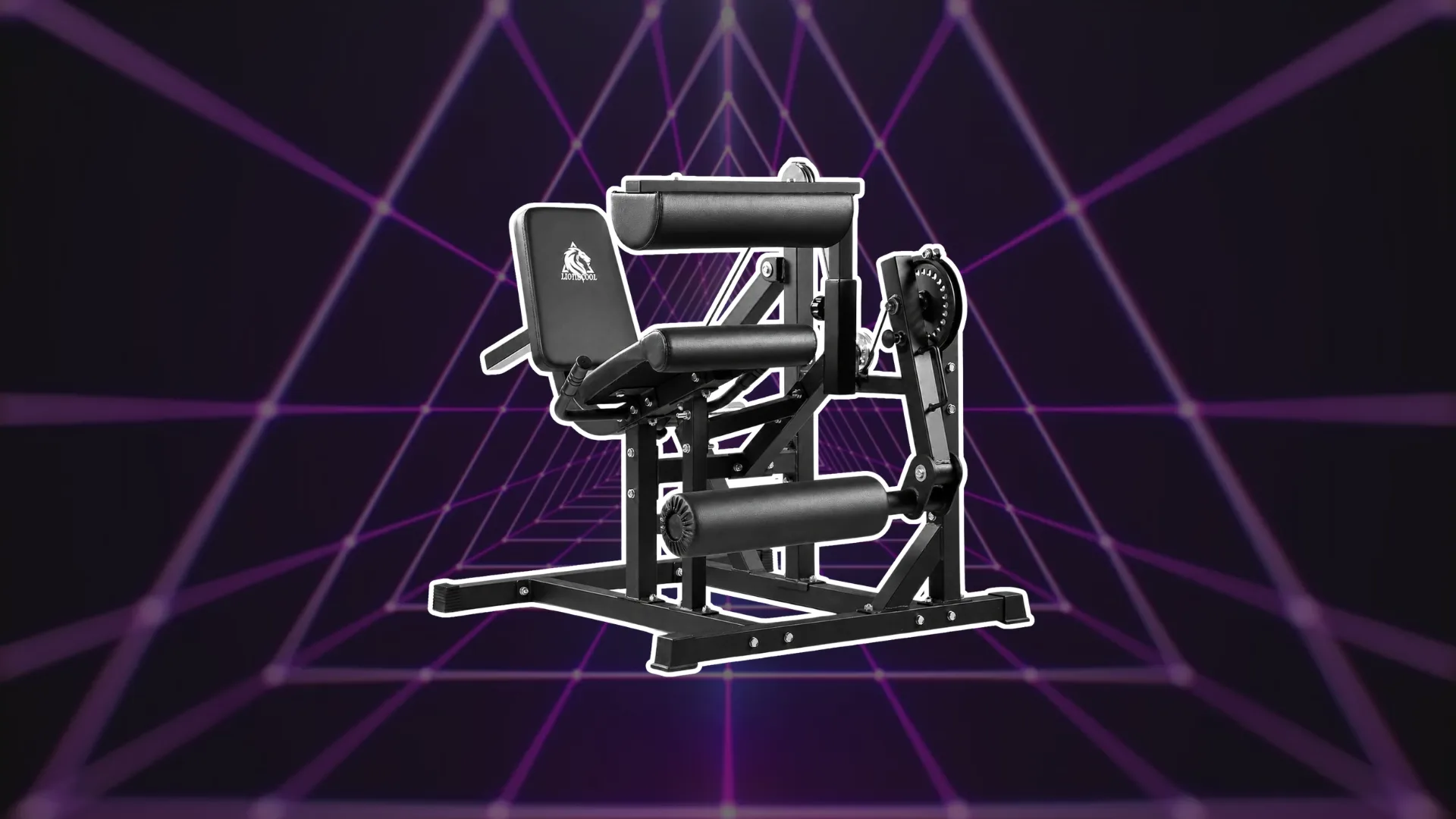
LionsCool Seated Curl Extension Machine Review
A rare, budget-friendly seated leg extension and curl machine with a consistent cam-pulley feel and one visible lever-arm flex.
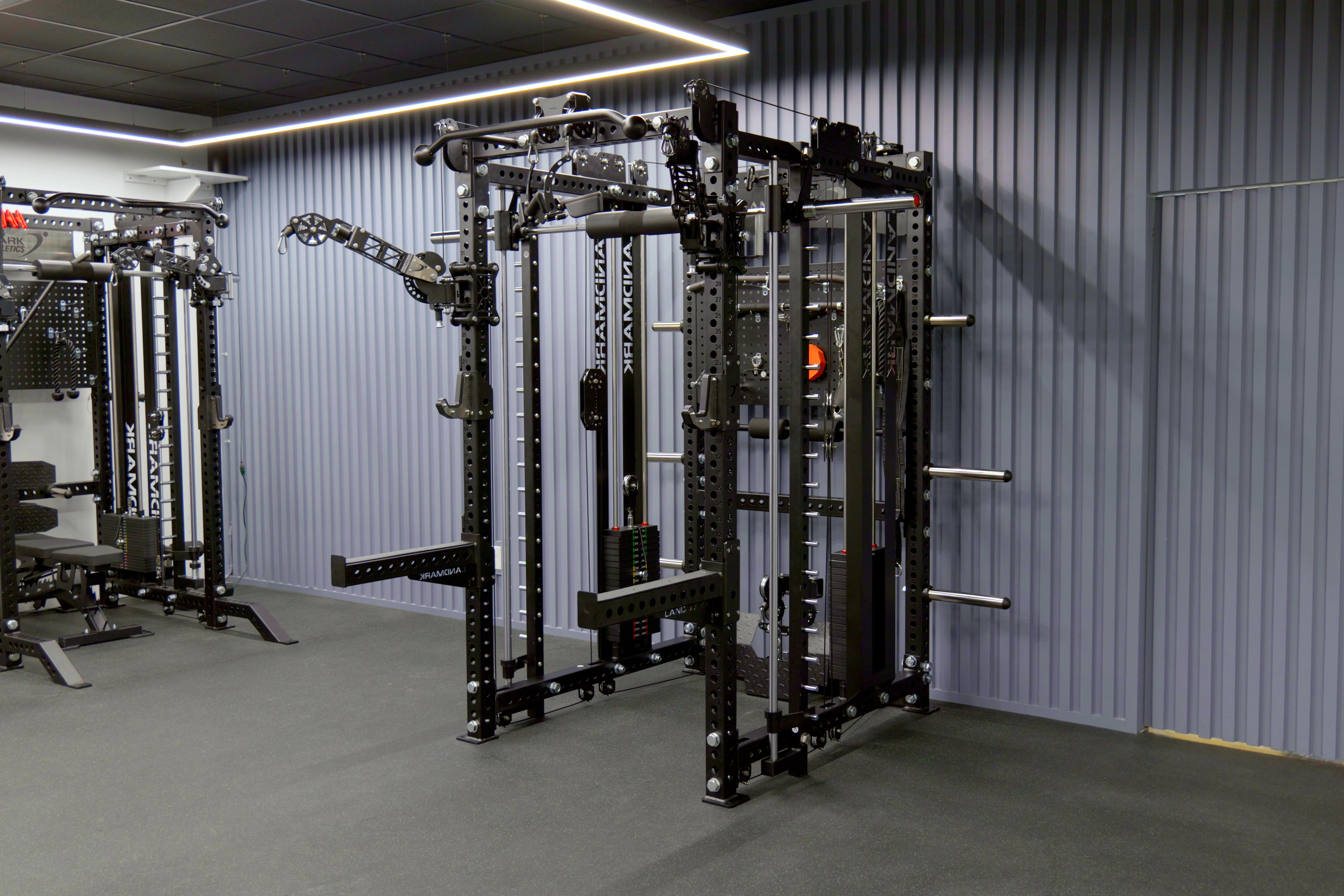
Landmark Athletics Everest All-In-One Trainer
The Everest is a complete, no-compromise all-in-one trainer built for lifters who want commercial-grade quality at home.
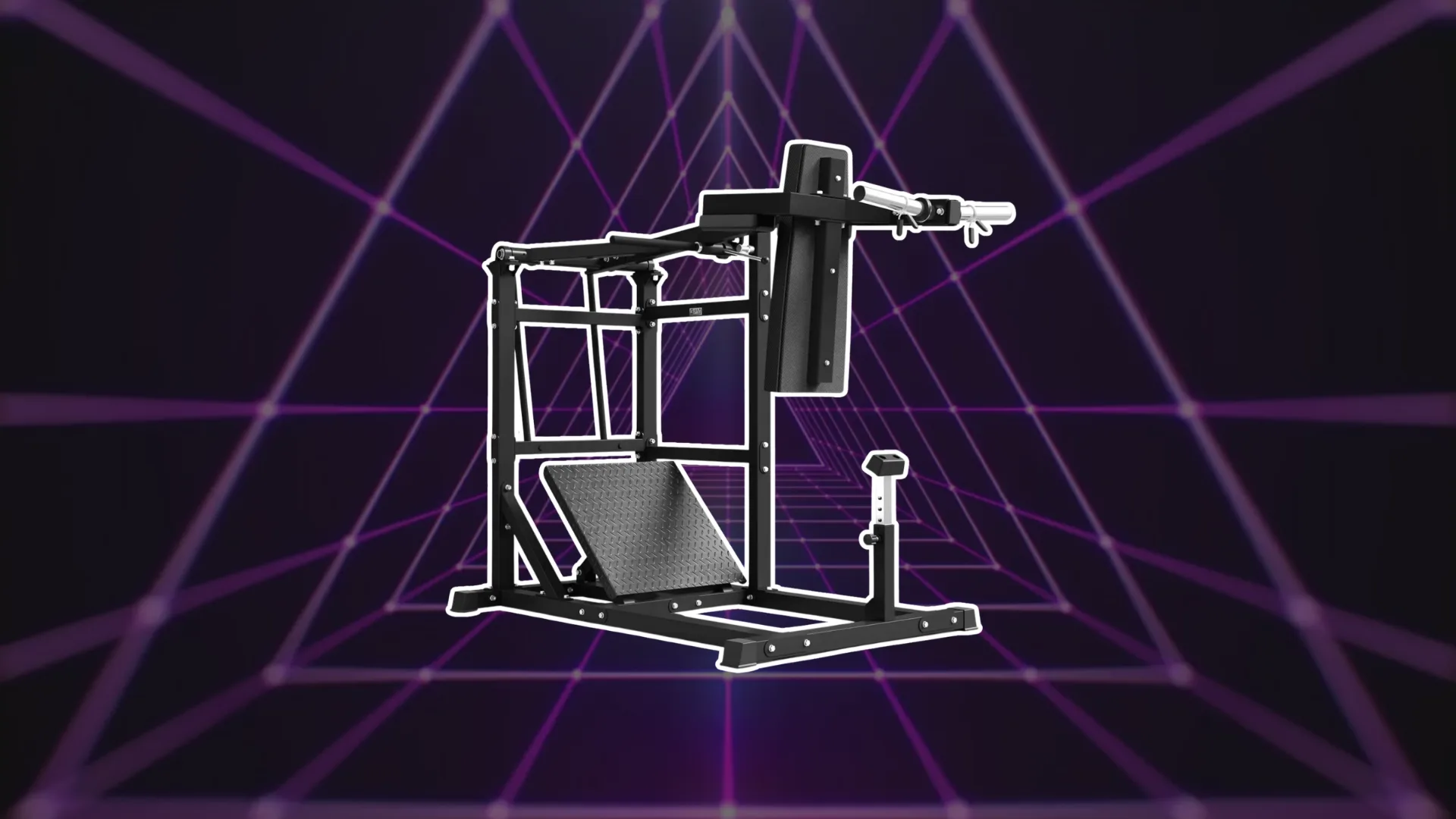
GMWD Pendulum Squat Review
GMWD's plate-loaded pendulum squat delivers deep, quad-crushing range of motion in a compact home-gym footprint for under $900.
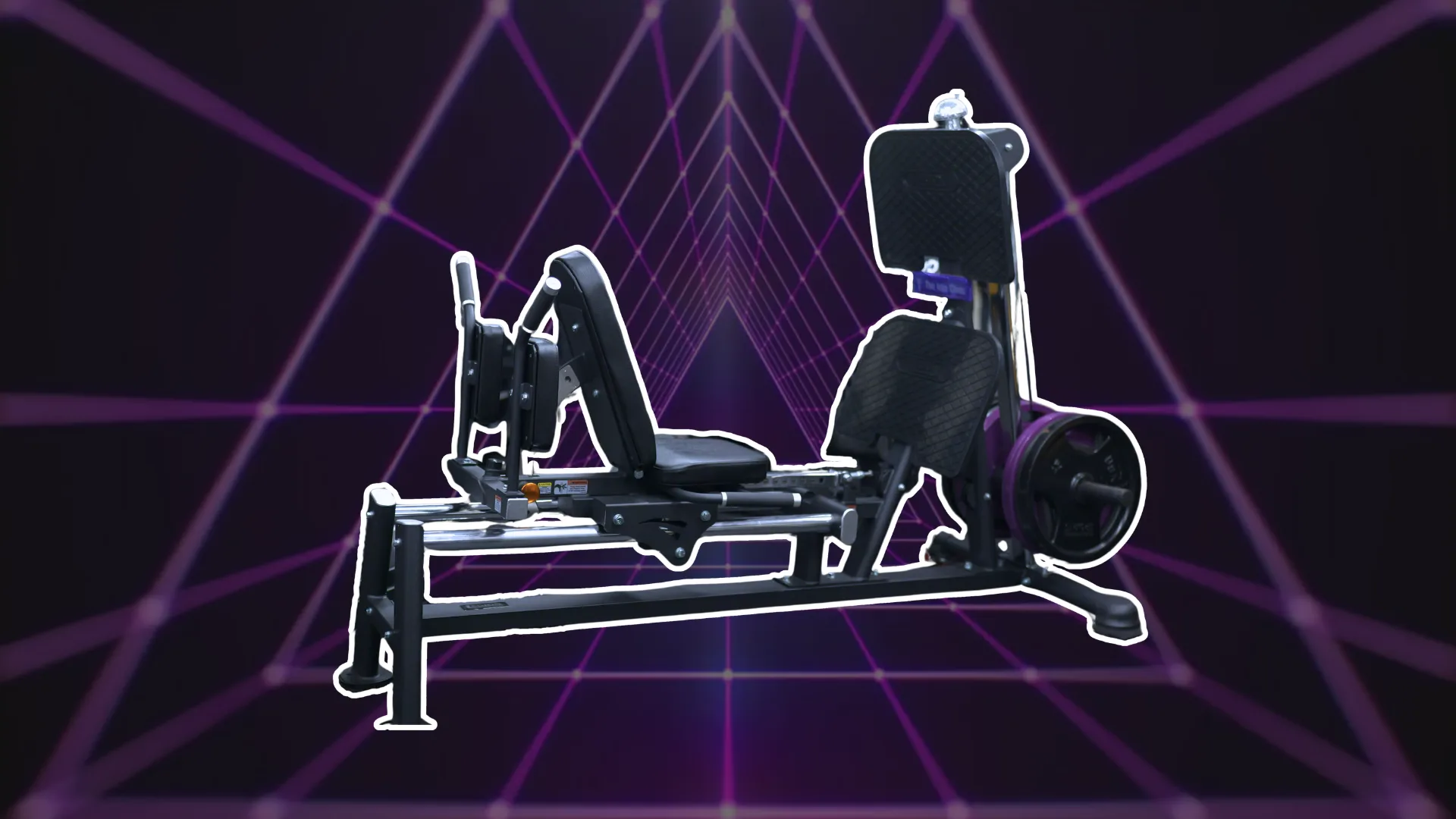
Legion LPHS Horizontal Leg Press Hack Squat
Commercial build, 1:1 ratio, fits where standard machines won't. The only horizontal leg press hack squat in its class.
GMWD Arete Leg Press Hack Squat Combo Review
The GMWD Arete combines hack squat, leg press, and calf raise into a single 1,000 lb capacity machine that delivers genuine versatility without compromising movement quality.
Powertec Leg Press Hack Squat Combo Review
The Powertec Leg Press Hack Squat Combo reviewed after 60 days: build quality and value at $1,583.