Landmark Athletics Everest All-In-One Trainer
Table of Contents
Landmark Athletics Everest
// Disclosure: links use go.ironclinicgym.com — my custom affiliate tracking. I may earn a commission at no cost to you. This never influences my ratings.
The Landmark Athletics Everest takes every lesson from the Luxor and builds what might be the most complete all-in-one trainer in the category. The dedicated center pulleys, a Smith bar that travels to 10 inches off the floor, and a 2:1/1:1 cable split solve real training problems that most competitors ignore. At $4,899 with code IRONCLINIC saving $150, it's premium pricing for a machine that leaves zero gaps to fill.
Pros
- 3x3 11-gauge steel frame with oversized bridge bolts and flawless powder coat sets a commercial-grade build standard at a residential price point
- Dedicated center pulleys (1:1 from both stacks) move heavy compound pulling inside the machine, reducing the day-to-day training footprint versus the Luxor
- Smith bar travels to 10 inches off the floor, unlocking RDLs, hip thrusts, and stiff-legged deadlifts that most all-in-one Smith machines cannot reach
- The 2:1 cable ratio on pivot arms delivers a 5.5-pound effective starting weight, solving the Luxor's 11-pound floor that limited lighter isolation work
- Thoughtful included accessories (fractional donut plates, weight stack adapter pins, knee holder bar, Vector Grip Handles) eliminate the need for immediate aftermarket purchases
Cons
- The 58-pound non-counterbalanced Smith bar is heavier than a standard Olympic barbell, which limits accessibility for lighter lifters or beginner trainees
- No barbell work inside the rack due to Smith bar trolley proximity to J-cup and safety arm mounting positions
- Cable twisting on front pivot arm trolleys appeared within a single day of testing, though long-term severity is unconfirmed
- The Remington bench ($384) is not included despite feeling like a natural extension of the machine's workflow
- Single-day on-site testing limits confidence in long-term durability claims for cable wear, powder coat longevity, and weight stack maintenance
Introduction
The Landmark Athletics Everest is the most complete all-in-one trainer I have used, and the reason is counterintuitive: Landmark made the machine bigger while shrinking the space you actually train in. It combines a Smith machine, a dual-stack functional trainer, a cable crossover, and a half rack on one 3x3 11-gauge steel frame, built as the direct successor to the Luxor. At $4,899, its regular list price and below the $5,699 MSRP, with our IRONCLINIC code taking another $150 off, the question is not whether it is good. It is whether the roughly $900 premium over the Luxor buys enough to matter. It does.
This is not my usual 30-to-90-day home test. I ran the Everest through 12 hours of continuous testing at Landmark’s facility, so the build and performance judgments here are firsthand while long-term durability claims are not. Where that distinction changes a conclusion, I say so. What follows covers the build and hardware, the split-ratio cable system, the unusually low Smith machine, daily workflow, how it compares to the machines you are cross-shopping, and who should skip it.
First Look
Landmark’s design language reads as commercial equipment before you touch it, and at arm’s length the Everest is nearly indistinguishable from the Luxor. The differences that matter are in finish and hardware. The powder coat is consistent across every surface I inspected, the welds are clean throughout, and the structural joints use oversized 1-inch bridge bolts that require a socket most owners will not have. Landmark ships that socket in the box, a roughly $100 inclusion that says more about how the company thinks about ownership than any spec sheet does.
One warning for buyers: the factory part-number stickers make assembly easier but resist removal afterward. Budget a plastic scraper, adhesive remover, and some patience to get them off cleanly.
Build Quality
The frame is 3x3 11-gauge steel with 1-inch holes spaced 2 inches apart, the same material class as commercial gym equipment. Rated capacity reflects that: 1,400 pounds on the Smith machine and over 1,500 pounds on the J-hooks and spotter arms. Those are engineering-margin numbers, not figures you will approach at home, but they explain how solid the machine feels under load.
The Luxor’s design lessons show up everywhere. Weight-horn storage no longer fights machine usability, and the weight-stack shrouds coexist with the plate-storage horns instead of forcing a choice between them. The knee holder bar is the clearest case of restraint paying off. It is a single steel bar that indexes into any 1-inch hole, which makes it a lap holder for pulldowns, a heel brace for hyperextensions, and a foot stop for lunges with no dedicated hardware. A more complicated part would have been a worse one.
The one build concern is the cables on the front pivot-arm trolleys, which twisted on themselves during use. This is common on machines that use rotating trolley arms, and I have seen it on the REP Altitude over months of testing. On the Everest it appeared within a single day, which is faster than usual. Whether that is a long-term maintenance issue or an assembly-and-break-in quirk, I cannot say from one day of use. My read leans toward the latter, but it is worth watching.
Setup & Installation
I cannot speak to assembly firsthand. The Everest was pre-built when I arrived, so I have no basis for judging build time, instruction quality, or the solo-assembly experience. Two things are worth noting for anyone building one. The part-number sticker system suggests Landmark put thought into keeping similar-looking components straight during the build, and the standardized 1-inch hole pattern across the frame simplifies accessory placement. If you have assembled an all-in-one before, the principles will be familiar, just heavier and at a larger scale.
Performance
The cable system is the Everest’s best engineering decision, and it fixes the most-cited limitation of the Luxor. The front pivot arms run at 2:1, which halves the load at the hand and drops the effective starting weight to about 5.5 pounds. That is the line between usable and useless for lateral raises, face pulls, and light curls, all of which the Luxor’s 11-pound 1:1 floor priced out. The fixed center pulleys run at a virtual 1:1 by drawing from both 200-pound stacks, so heavy pulldowns and rows keep full load. Two adapter pins per side let you exceed the stack with Olympic plates when you need more, and two 1.25-pound donut plates allow 2.5-pound jumps for progressive overload, a detail most machines at this price skip. The 2:1 arms also feel smoother than a 1:1 setup, because the extra pulleys iron out the micro-jitter without making the weight feel lighter than it is.
The Smith machine is the standout, and the reason is a single measurement. Most all-in-one Smith bars bottom out at 15 to 18 inches off the floor, which covers pressing and squats but rules out floor-based work. The Everest’s bar travels to about 10 inches off the ground, roughly a barbell loaded with 45-pound plates. That unlocks RDLs, stiff-legged deadlifts, and hip thrusts alongside bench and overhead work, and all of them held up at my 6-foot-1 height, with RDLs the closest to the limit. The hooks now sit outside the uprights rather than inside, which frees the full internal width for pressing without clipping your elbows on the catch hardware. The lockout is clean across all 18 positions, with no binding.
The one caveat is bar weight. At 58 pounds and not counterbalanced, the Smith bar is heavier than a standard Olympic barbell, and on a fixed path that can be a real barrier for lighter lifters or beginner clients. If that describes you or the people you train, weigh it before buying, because there is no adjusting it.
Versatility
The Everest’s practical advantage is that almost everything happens inside the frame instead of in front of it. The Luxor made you stand or sit in front of the unit for cable work on the front-upright pulleys. The Everest moves heavy pulling to the fixed center pulleys, so the footprint the machine occupies is essentially the footprint you train in. On paper the two are nearly the same size (47-inch internal width, 57-inch depth, 92 inches tall versus the Luxor’s 90), but the usable space feels larger because of where the work takes place.
That workflow is the thing a spec sheet cannot show. Across 12 hours I moved between cable movements, Smith work, and free weights with no reconfiguring: the bench slides freely, the center pulleys clip in and out fast, and the pivot arms adjust without a fight. The included accessory kit is deep enough to train on day one, covering handles, a lat bar, a straight bar, extension chains, J-hooks, spotter arms, adapter pins, a pegboard, pivot arms, a revolving curl bar, a Double-D handle, donut plates, linking clips, a tricep rope, and the knee holder bar. The Landmark Remington bench ($384) is the one add-on worth budgeting for, because its adjustable head configures for incline pressing, pulldowns, and chest-supported rows without leaving the rack. Standard benches fit fine.
For storage, the oversized rear pegboard keeps attachments off the floor, the rear cross members hold J-cups and accessories, and the safety arms fit on the rear uprights even without a dedicated home.
Value
At $4,899, the Everest is priced at the top of the all-in-one category. That is its regular list price rather than a temporary sale, set against a $5,699 MSRP, and our IRONCLINIC code takes another $150 off. At any of those numbers it is a premium machine, and the cross-shop comes down to what each rival actually wins.
Think of it less as another do-everything multi-tool and more as a chef’s knife in a category full of Swiss Army knives. Plenty of machines get you to the same finished set. The Everest is the one engineered to execute each movement with the precision of purpose-built equipment, not the compromise of a gadget that does a little of everything.
The Luxor at $3,999 is the real reference point, because it is the machine most Everest buyers are actually deciding against. The gap between them is roughly $900, and the honest question is not whether the Everest is better. It is whether the specific things that $900 buys are things you will use.
Four of those upgrades change how you train rather than just what the spec sheet says. The center pulleys are the headline: they draw from both 200-pound stacks for true heavy pulldowns and rows inside the frame, where the Luxor routes that work through the front uprights and asks you to train in front of the machine. The 2:1 front arms drop the isolation floor to about 5.5 pounds against the Luxor’s 11-pound 1:1, which is the difference between usable and unusable for lateral raises, face pulls, and light curls. The Smith bar travels nearly to the floor instead of stopping short, which adds RDLs, stiff-legged deadlifts, and hip thrusts to the same station. And the Smith hooks move outside the uprights, so pressing gets the full internal width.
Add it up and the $900 is really buying two things: heavy pulling that stays inside the frame, and a genuinely usable light-load cable range. If you train those movements, the Everest pays the premium back quickly, and it does it in nearly the same footprint. If your training is mostly pressing, squatting, and mid-weight cable work, the Luxor already covers you, and the Everest’s advantages become nice-to-have rather than need-to-have. The Everest is not a better Luxor so much as a more complete one, and the premium is the price of completeness you may or may not use.
Luxor vs Everest at a glance
| Spec | Luxor | Everest |
|---|---|---|
| Price | $3,999 | $4,899 |
| Center pulleys | No | Yes, virtual 1:1 |
| Front arm ratio | 1:1 (11 lb floor) | 2:1 (~5.5 lb floor) |
| Smith low point | Higher off floor | ~10" off floor |
| Smith hooks | Inside uprights | Outside uprights |
| Height | 90" | 92" |
| Frame | 3x3 11-gauge | 3x3 11-gauge |
I cover the next few machines in the video, but they are worth restating here for anyone reading rather than watching.
The Landmark Training Camp EXT-3 ($3,299 base, $3,699 bundle) is the entry point into the category from the same parent brand: lighter tubing, a smaller attachment ecosystem, no center pulleys. It is the sensible on-ramp for a first home gym or a tighter budget, not a rival to the Everest’s capability.
The RitFit M2 Pro 3D (about $3,100) gives up build and size but plays one card the Everest cannot match: a 3D Smith bar that moves front to back and side to side, not just straight up and down. If guided-but-free Smith movement is non-negotiable, it is worth a look despite the trade-offs.
The Flash Fitness F50 ($6,495) costs more and includes more, with a bench, leg extension, preacher pad, decline attachment, and extra bars, plus a counterbalanced Smith bar the Everest lacks. It also lacks center-mounted pulleys, so heavy pulls are limited to one stack at a time. The choice is more accessories versus a more focused, better-pulling station.
The REP Fitness Altitude (roughly $1,000 to $4,000 depending on configuration) is the pick for modularity and inside-the-rack barbell work, though it is 2x3 rather than 3x3. REP’s Summit Series on the Ares 2.0 base is the closest true head-to-head in a 3x3 package.
The last comparison never came up in the video, so I am going deeper on the Force USA C20 here than on the machines above.
A note on this comparison: I have not put the Force USA C20 through a full Iron Clinic review. I spent time on it at Home Gym Con, where it came across as genuinely well built, but anything below that I have not personally measured comes from Force USA’s published specs. Treat this as a like-for-like spec comparison, not a tested head-to-head like the machines above.
The C20 is the Everest’s closest rival in the premium tier, and the two share more than they differ. Both are 3x3, 11-gauge steel frames with 1-inch holes, both use a center cable system feeding dual 200-pound stacks, and both run their front arms at a 2:1 ratio for a light isolation floor. The decision between them comes down to a handful of deliberate differences.
The C20 answers the Everest’s biggest caveat directly. Its Smith bar carries a 35-pound integrated weight against the Everest’s 58-pound non-counterbalanced bar, which is the difference that matters most for lighter lifters and beginner clients. Force USA also lets you upgrade the stacks to 250 or 300 pounds per side where the Everest is fixed at 200, and its patent-pending Sliding Bench locks into the lower pulleys for up to 600 pounds of resistance on leg presses and hack squats, a station the Everest has no equivalent for. The C20’s attachment ecosystem is open to third-party parts, while Landmark’s is proprietary but ships complete.
The Everest pushes back on price and footprint. At $4,899 it undercuts the C20’s roughly $6,499 by around $1,600, and its interior training width is slightly wider (47 inches versus 43). The C20’s articulating arms give it a larger external footprint at 77 inches wide, so it asks for more floor. Micro-loading differs in approach too: the Everest uses 1.25-pound donut plates for 2.5-pound jumps, while the C20 builds in a 5-pound micro-adjustment plate.
Two of those differences are big enough to change a buying decision on their own. The Sliding Bench turns the C20 into a genuine leg-press and hack-squat station, a category of training the Everest does not offer without separate equipment. And the upgradeable stacks matter for the strongest lifters, who can outgrow the Everest’s fixed 200 pounds per side on pulldowns and rows. If either describes your training, the C20’s premium starts to look like money well spent rather than more machine than you need.
Spec for spec, these are the two most complete center-cable machines in the category. The C20 is the pick if a lighter Smith bar, upgradeable stacks, or the Sliding Bench solve a problem you have and the higher price and larger footprint are acceptable. The Everest is the pick if you want most of that capability in a tighter footprint for meaningfully less money.
| Spec | Landmark Everest | Force USA C20 |
|---|---|---|
| Price | $4,899 ($5,699 MSRP) | ~$6,499 |
| Frame | 3x3 11-gauge, 1" holes | 3x3 11-gauge, 1" holes |
| Cable system | Center pulleys + 2:1 front arms | Center cable + 2:1 freestyle arms |
| Weight stacks | Dual 200 lb, fixed | Dual 200 lb, upgradeable to 300/side |
| Smith bar | 58 lb, non-counterbalanced | 35 lb integrated |
| Smith low point | ~10" off floor | Full deadlift ROM (industry-leading low) |
| Micro-loading | 1.25 lb donuts (2.5 lb jumps) | Built-in 5 lb micro plate |
| Cable-connected bench | Remington optional ($384) | Patent-pending Sliding Bench, up to 600 lb |
| Attachment ecosystem | Proprietary, ships complete | Open, third-party compatible |
| Interior width | 47" | 43" |
| Exterior footprint | Tighter floor plan | 77" W x 66" D |
Where to buy: Force USA C20 via our affiliate link, go.ironclinicgym.com/Force_C20, with code IRONCLINIC for a discount.
Landmark backs the Everest with a lifetime residential warranty on manufacturer defects, three years commercial, and one year on wear items.
Who Is This For?
The Everest is for the buyer who wants one machine to cover every major movement without compromise and has the floor space and budget to match. If you are building around a 3x3, 1-inch-hole standard, it fits cleanly, and if you are starting fresh, it is easy to learn on and hard to outgrow.
It is not for anyone who needs barbell work inside a power cage. The Smith trolley occupies the internal space, so barbell movements happen outside the rack, the same limit the Luxor had. If inside-the-rack barbell training is non-negotiable, the REP Altitude or Summit Series is the better fit. It is also not the machine for lighter or newer lifters who cannot work with a 58-pound non-counterbalanced Smith bar, where the F50’s counterbalanced bar makes more sense.
Final Verdict
The Everest earns its price by refusing the corners that usually define this category. The center pulleys reclaim your floor space, the 2:1 split makes light isolation work viable, the Smith bar reaches the floor, and the accessory kit closes the gaps most machines leave to the aftermarket. The only structural compromise is that barbell work happens outside the rack, and the only accessory I would move in-box is the Remington bench. Neither is a reason to shop elsewhere.
Twelve hours is not twelve months, so I am holding a formal durability verdict until I have lived with the cables and the pivot-arm twisting over time. Everything else, the frame, the welds, the hardware, and the warranty behind them, gives me no reason to doubt it. If you have the floor space and the budget, the Everest is a buy-once machine.
Keep Reading

LionsCool Seated Curl Extension Machine Review
A rare, budget-friendly seated leg extension and curl machine with a consistent cam-pulley feel and one visible lever-arm flex.
Temple of Gainz Quadsend Review
The $4,200 Quadsend is the best-built leg press hack squat combo for home gyms, period.
GMWD Pendulum Squat Review
GMWD's plate-loaded pendulum squat delivers deep, quad-crushing range of motion in a compact home-gym footprint for under $900.
Landmark Athletics Luxor All-In-One Trainer
The Luxor is the serious, commercial-grade all-in-one trainer that actually delivers on modularity and cable feel.
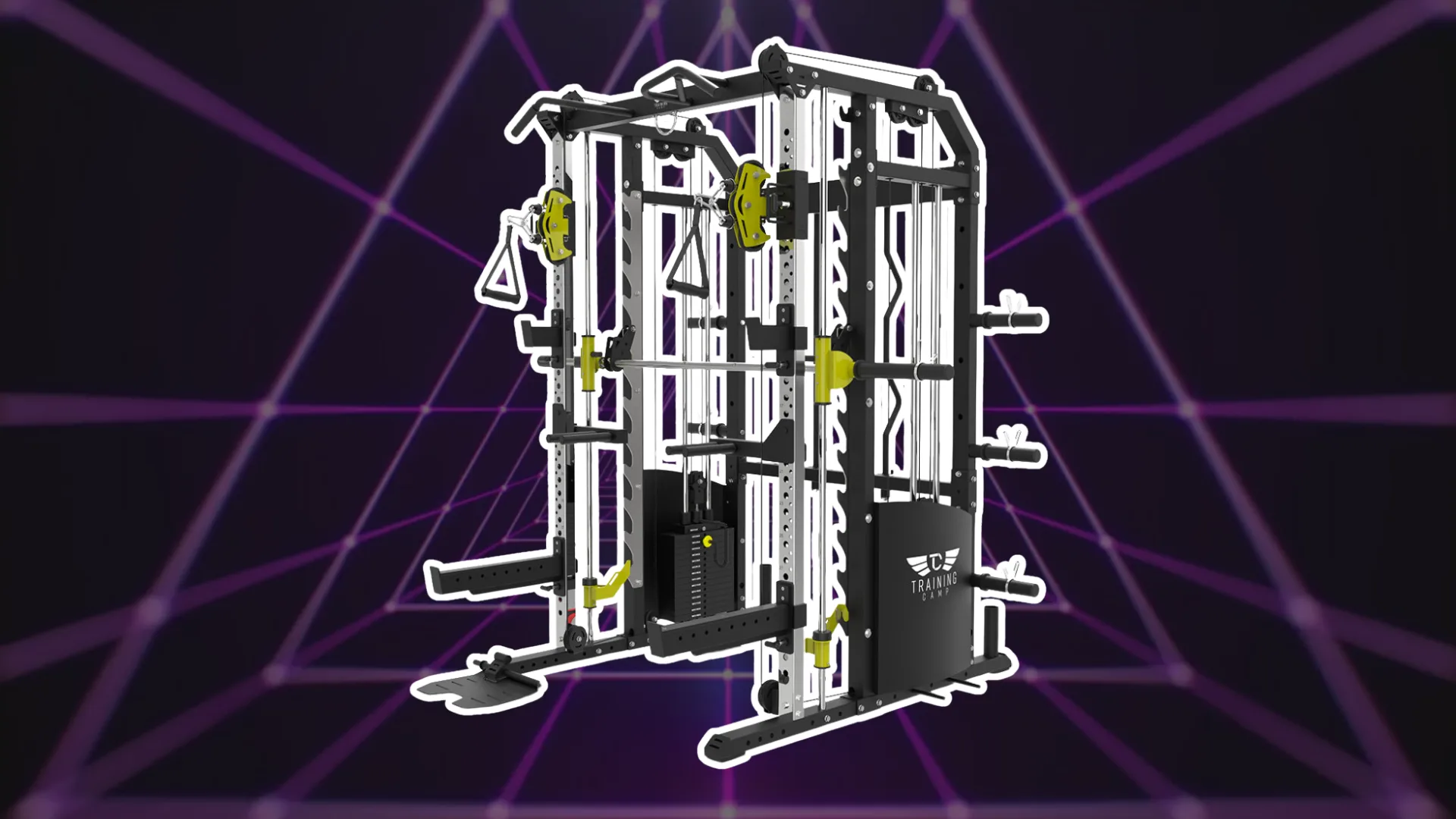
Landmark Athletics TC EXT-3 All-In-One Trainer
Rare all-in-one machine that doesn't cut corners and actually delivers on its promises.
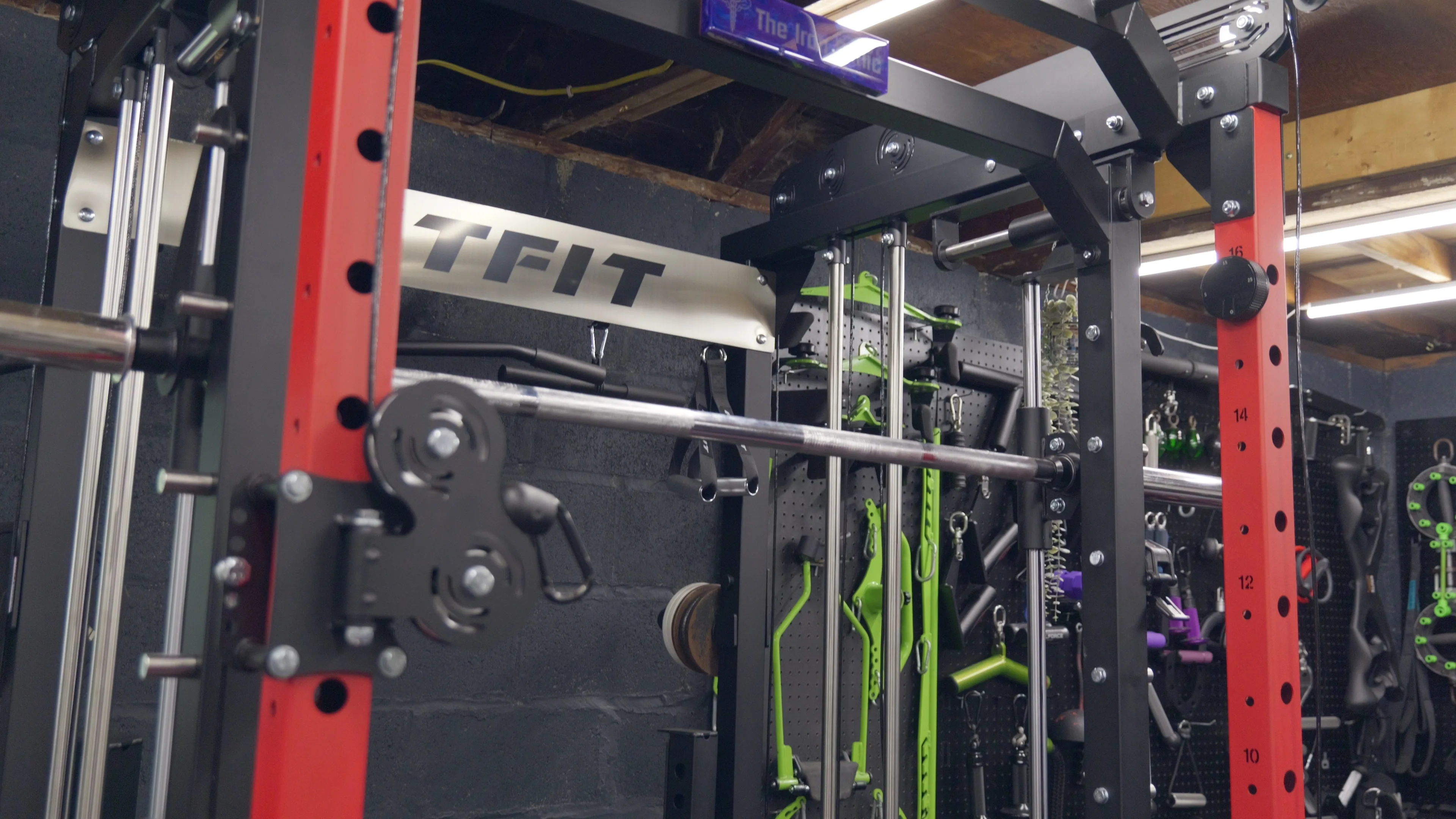
RitFit M2 Pro 3D
The RitFit M2 Pro 3D earns its $3,099.99 asking price in base configuration; skip the weight stack upgrade.
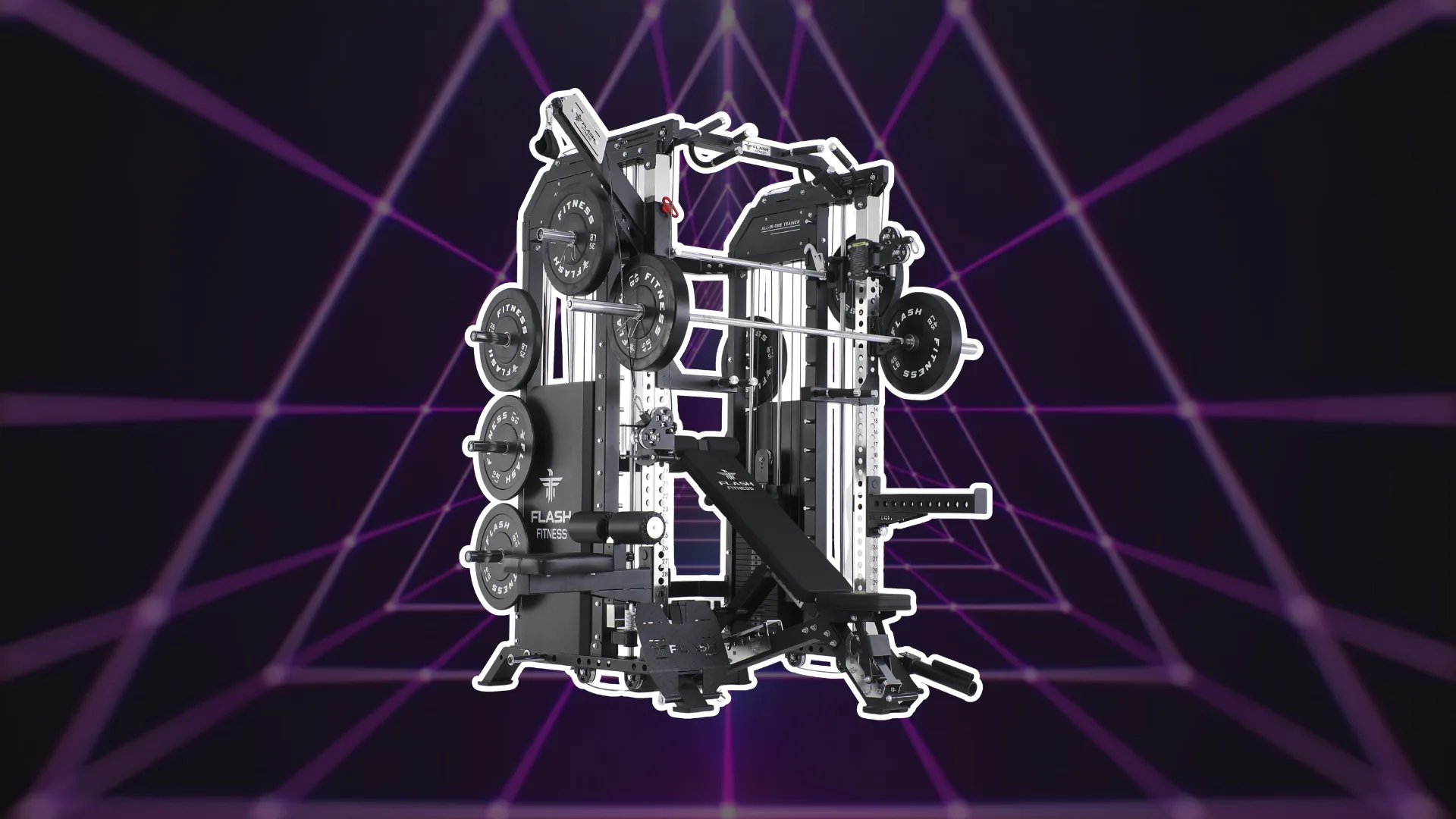
Flash Fitness F50 All-In-One-Trainer Review
A two-week initial impressions review of the Flash Fitness F50 all-in-one trainer: build, performance, and verdict.
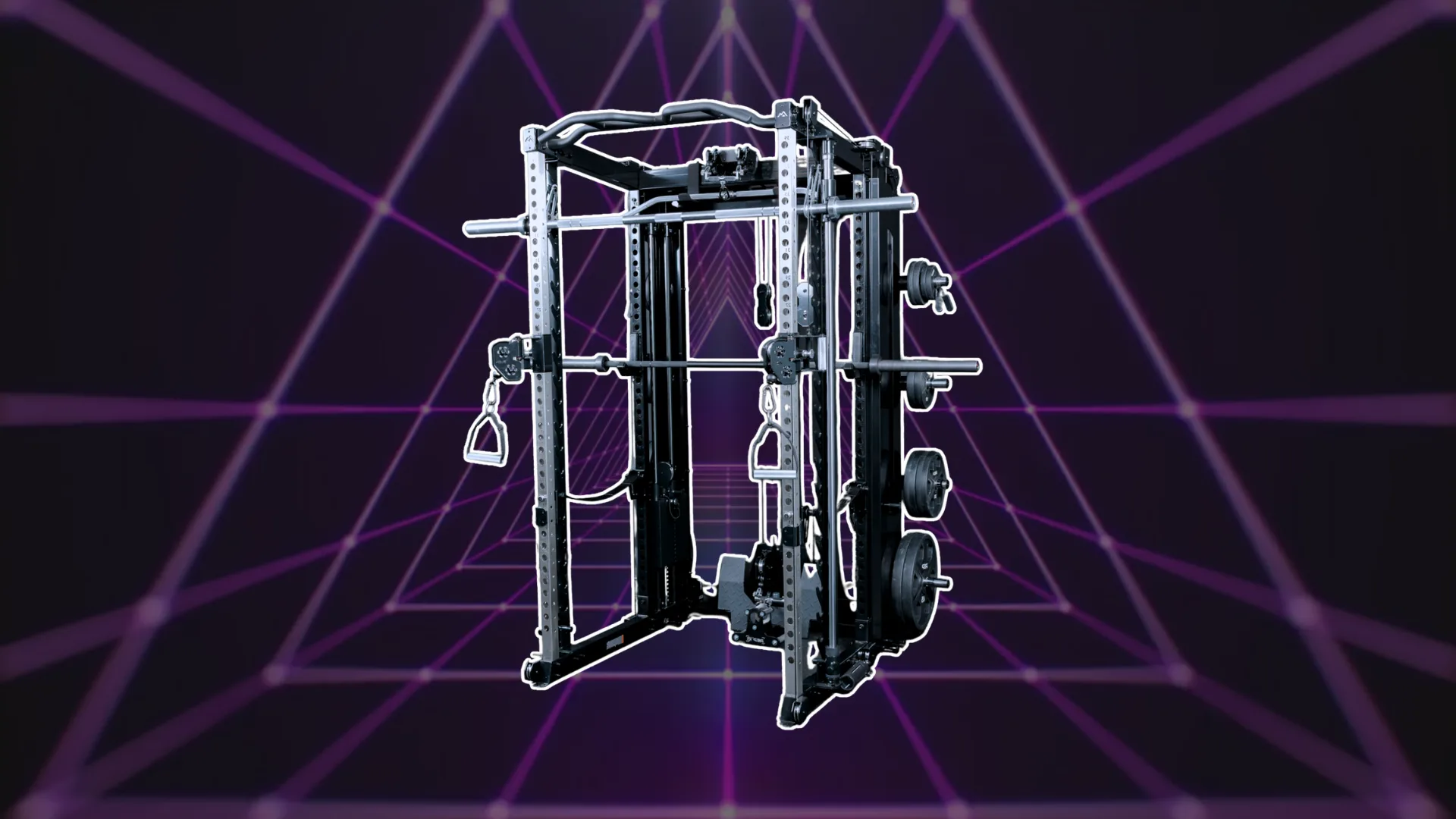
REP Fitness Altitude
The REP Altitude is the rare compact all in one that feels premium, stable, and actually fun to train on.