RitFit M2 Pro 3D
Table of Contents
RitFit M2 Pro 3D
// Disclosure: links use go.ironclinicgym.com — my custom affiliate tracking. I may earn a commission at no cost to you. This never influences my ratings.
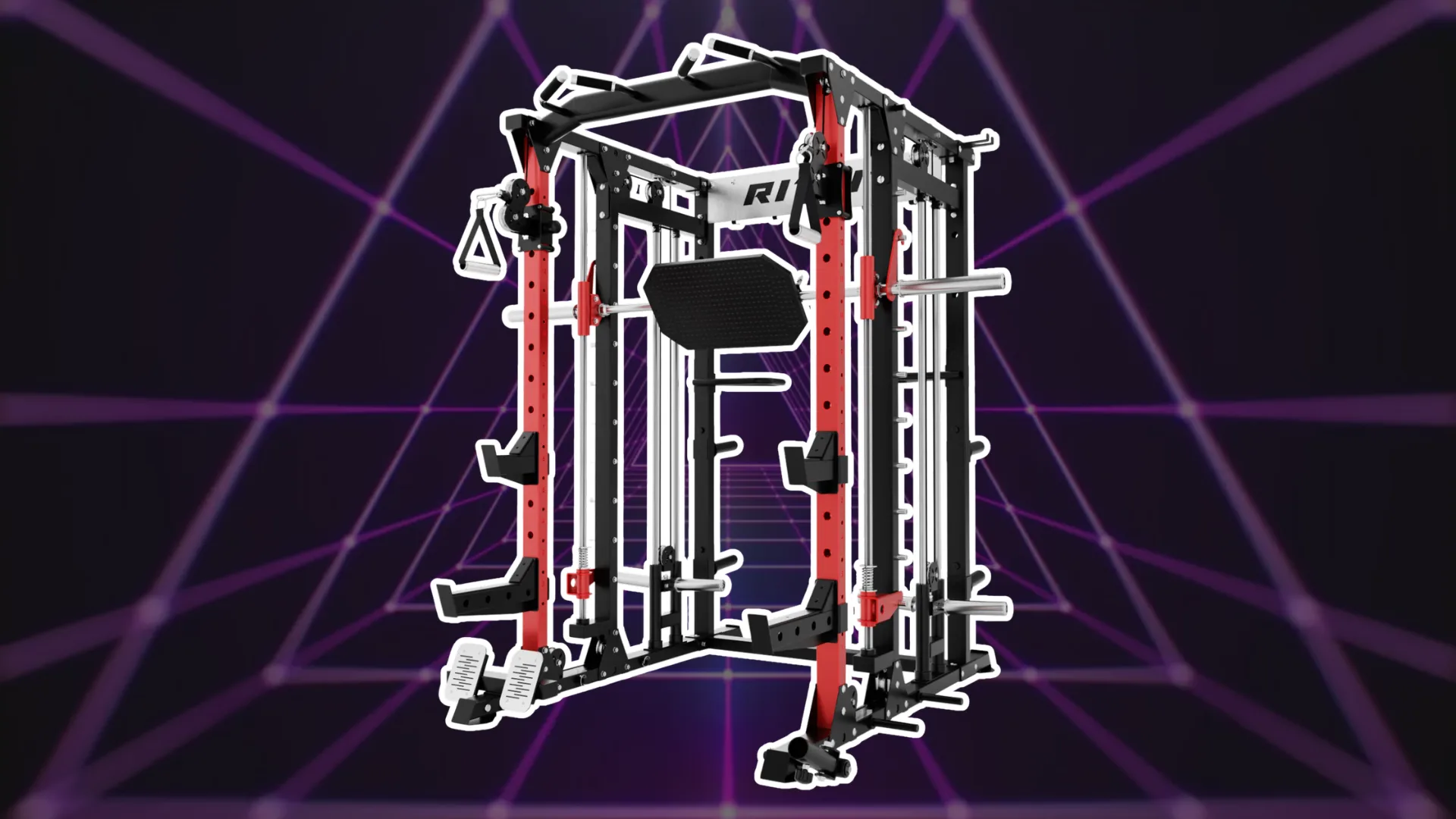
The RitFit M2 Pro 3D is a mid-tier all-in-one trainer that delivers a 3D Smith machine with approximately six inches of front-to-back bar travel in a 23-square-foot footprint at $3,099.99. The base configuration is worth the price for the combination of power rack, dual-stack cable system, and a Smith machine that moves differently than every other home gym Smith machine at this level. Skip the weight stack upgrade until RitFit publicly addresses the guide rod manufacturing defect documented in this review.
Pros
- 3D Smith bar travels approximately six inches front-to-back in 10 adjustable positions and locks to a standard fixed-path Smith in two seconds
- Matte powder coat finish showed zero visible wear after 60 days of active training
- Dual 143-lb weight stacks include plate-loaded cable horns on each trolley, providing a second loading method when stack weight alone isn't enough
- 13-gauge steel uprights with nylock hardware throughout; at 60 days nothing has shifted, rattled, or loosened
- Power rack, dual-stack cable crossover, pull-up station, landmine, and 3D Smith machine in approximately 23 square feet
Cons
- All four guide rods have a raised manufacturing burr from the bolt-hole punch that scrapes plastic stack bushings above 40 pounds of stack weight; the $600-$700 weight stack upgrade is not worth buying until RitFit acknowledges and addresses this
- Front uprights use a non-standard hole diameter to accommodate cable trolley mounting pins; standard 1-inch ecosystem attachments don't fit the two front uprights
- Smith bar knurling is printed-on rather than machined; grip reliability falls off under heavy barbell rows and movements requiring consistent bar contact
- No floor bolt-down holes on a machine with a freely floating Smith bar; rubber feet only, no anchoring option
- Instruction manual covers all four M2 configurations with no build-specific navigation; adds friction for first-time builders
Introduction
Most Smith machines do the same thing. The bar goes up and down on a fixed vertical track, safety stops keep you honest on heavy sets, and you trade free-bar instability for a controlled path of movement. RitFit looked at that trade and asked whether approximately six inches of front-to-back travel would add enough variability to change how the movement trains without giving up the safety properties that make a Smith machine worth having. That question is the RitFit M2 Pro 3D.
I used this machine for 60 days. Squats, bench press, incline, overhead press, rows, cable flies, tricep pushdowns, lat pullovers, and anything else I could put through it. The short answer on the 3D Smith: it works the way RitFit says it does, it adds something a fixed-path Smith machine doesn’t give you, and at $3,099.99, whether that difference justifies the price gets a full treatment below.
Before we get there: the weight stacks. RitFit offers a $600-$700 upgrade for this machine that adds meaningful stack weight. Right now, I’m not recommending it. The guide rods have a manufacturing defect I documented during a complete disassembly, and two attempts to reach RitFit for comment before filming this review went unanswered. The base machine is worth the price. The upgrade, in its current state, carries a problem you shouldn’t buy into.
The M2 Pro 3D is the top configuration in RitFit’s M2 series, which runs in four versions. The base M2 is a plate-loaded cable rack with a standard fixed-path Smith machine. The M2 3D adds the three-dimensional Smith bar at $2,199.99. The M2 Pro adds dual 143-pound weight stacks with a standard Smith at $2,799.99. The M2 Pro 3D combines both upgrades at $3,099.99: the weight stacks and the 3D Smith bar in approximately 23 square feet of floor space.
First Look
This arrived in more than five cardboard boxes through FedEx. The boxes were beat up, which is what happens when you ship something this heavy across a fulfillment network. Everything inside was intact. RitFit doesn’t use heavy internal foam padding the way higher-tier brands do, so the cardboard is doing more protective work than it should at this price. Nothing was damaged, but the unboxing experience communicates mid-tier before you’ve handled a single part.
Once you start pulling components out, the machine makes a better impression. The matte red powder coat on the uprights stood out immediately. Most equipment at this price arrives in glossy black, which shows fingerprints and starts looking worn within a few months. The matte finish looks better than the glossy black standard at this price, and held up without visible wear or scratching over 60 days of active use.
The parts all arrived accounted for and hardware is organized in labeled bags, which saves time at assembly.
Build Quality
The uprights are 13-gauge steel in a 2.36-inch square profile, a step up from RitFit’s M1 line. That gauge matters in practice: 14-gauge steel in a similarly sized machine can flex under heavy barbell load in a way that 13-gauge doesn’t. Under the loads I tested on this machine, the uprights don’t move.
The welds are consistent throughout. Clean lines, no cold welds or rough spots. For the category and the price, that’s exactly where you want to be. The matte powder coat held for the full testing period with no scratching from equipment contact and no fading in the areas that see the most handling.
The safety arms have two different surface materials depending on which side you’re looking at. The exterior surface, where the arm contacts the upright when it swings, has UHMW polyethylene lining. That’s the correct material for protecting the finish over years of use. The interior surface, where the barbell actually lands on a failed lift, uses a felt-type material held in place with adhesive. UHMW on both surfaces is standard on quality racks. Felt on the landing surface is a question. At 60 days it’s intact. This one goes in the long-term watch category.
The Smith bar knurling is a recurring issue on RitFit’s Smith machines and the M2 Pro 3D doesn’t fix it. The knurl has a printed-on quality: the edges of the pattern fade rather than cutting hard the way machined knurling does. For light cable accessory work done through the bar, it functions. For heavy barbell rows or any movement where you need confident grip, it underperforms. The REP Fitness Altitude series ships with a Colorado barbell Smith bar that has properly machined knurling. RitFit has built a meaningfully interesting Smith machine design and the bar attached to it works against it. The RitFit Buffalo has the same issue.
One structural detail worth knowing for anyone planning to build out an accessory ecosystem: the front uprights use a slightly larger hole diameter than standard one-inch to accommodate the cable trolley mounting pins. Standard 1-inch aftermarket accessories don’t fit the two front uprights. They fit the rear uprights cleanly. The Mikolo Anubis 2.0 runs consistent 1-inch holes on all four sides of every upright. If you plan to expand your setup with aftermarket attachments over time, the front upright limitation is worth understanding before committing.
Hardware throughout is nylock. At 60 days, nothing has shifted or loosened.
Setup & Installation
Assembly took four hours working solo, which is the wrong approach. Get a second person. Several stages are significantly easier with help, and two people should cut the time substantially. This is not a solo build.
The mechanical execution is straightforward. Parts seat correctly, bolts thread cleanly, nothing required forcing or shimming. For someone doing their first major home gym build, the mechanical steps won’t be the barrier.
The instructions will be. RitFit ships a single combined booklet covering all four M2 configurations with no build-specific navigation. Building the Pro 3D means identifying which pages apply to your build and mentally setting aside the rest. For an experienced builder, this is mildly irritating. For a first-timer, the navigation problem will cause real confusion and add time.
Before your first loaded set, inspect both sides of the Smith machine safety hook catch. On my unit, the hook sits flush in the center of its landing rod on the left side and near the edge of the rod on the right. The hook is fully engaged and has stayed stable through 60 days without incident. Check yours carefully before putting weight on the bar.
The machine needs to be level front-to-back for the 3D Smith to work correctly. If the frame isn’t level, the floating bar will drift toward the lower end under its own weight. Plastic leveling shims from any hardware store solve this permanently. RitFit doesn’t document this requirement prominently.
Performance
The 3D Smith Machine
The standard Smith machine runs the bar up and down on a fixed vertical track. The M2 Pro 3D adds a second axis: front-to-back travel of approximately six inches. Ten positions span that range. At the bottom of the bar’s path, a spring-loaded pin on each side converts the floating bar to a fixed-path standard Smith in roughly two seconds. Push the bar in the opposite direction to release. The mechanism is simple enough to operate mid-workout without breaking rhythm.
Training in the floating range means your primary movers and the stabilizing muscles around the lift both have a job to do. The bar isn’t fighting you the way a free barbell does, but it isn’t being fully guided either. For hypertrophy work at moderate to sub-maximal loads, that middle ground produces a training feel that’s genuinely different from a standard Smith machine. When you want to push to failure without managing bar stability, lock it and the guided path is there.
This is not the same as commercial multi-axis Smith machines with several feet of total travel. Six inches doesn’t replicate a free barbell. What it does is take the movement off a rigid guided track, and you can feel that change from the first rep. Whether that change justifies the price premium over the base M2 3D depends on how much you value that variation in your training.
Two things I’d want improved in a future version. A top-position lock in addition to the bottom one would eliminate the slight flex detectable at the pin when the bar is near the top of its path. It doesn’t affect training feel, but it’s perceptible during setup. More travel range would also push the experience further. A full foot of front-to-back movement would start to meaningfully approximate a free-bar path. That’s a real step in that direction; it isn’t the destination.
The Cable System and the Weight Stack Issue
The M2 Pro 3D comes with dual 143-pound weight stacks, 286 pounds of total resistance split across two cable stations. The cable system runs at a 2:1 ratio, meaning effective resistance at the handle is approximately half the loaded stack weight. Per-side ceiling is around 71 pounds.
For most cable accessory work, 71 pounds is functional. Cable flies, tricep pushdowns, bicep curls, lat pullovers, and single-arm rows all fall within that range for most training setups. Anyone pulling heavy bilaterally on lat pulldowns or cable rows will hit that ceiling.
Each trolley includes plate-loaded weight horns as a supplemental loading option. You can add plates directly to the cable setup beyond what the weight stack provides. One operational requirement: load both horns per side symmetrically. In my testing, five to ten pounds of asymmetrical loading on a single horn was enough to shift the stack off-center and produce audible contact with the guide rods. Load both horns evenly and the issue disappears.
On the weight stack upgrade: I’m not recommending it right now.
During assembly and in the first training sessions, both stacks showed friction above 40 pounds of loaded weight. Not the occasional roughness common to a new machine, but consistent resistance before each repetition initiated. I disassembled both stacks completely to identify the cause. All four guide rods have a raised burr on the same end, at the same location. When the manufacturing process punches the hole at the top of each guide rod for the securing bolt, the exit side of that punch leaves a raised lip of metal. That lip scrapes the plastic bushings inside the stack on every repetition above 40 pounds.
I filmed this during a live stream and documented the full disassembly afterward. The video shows the plastic debris inside both stacks, the visible difference in wear severity between left and right, and the same defect across all four rods. This is not an assembly variation and it is not specific to my unit. All four guide rods show the same deformity on the same side. That is a manufacturing process issue.
I contacted RitFit twice before filming this review. No response.
The base machine with the plate-loaded cable horns is a working cable setup. Loading plates manually is an inconvenience compared to a smooth weight stack. A weight stack that may be degrading from day one is a different category of problem. Skip the upgrade until RitFit addresses this publicly.
Versatility
The M2 Pro 3D covers a genuine amount of equipment in one footprint. Power rack, dual-stack cable crossover, pull-up station, landmine attachment, and the 3D Smith machine all run from the same frame in approximately 23 square feet. For a home gym owner building from scratch and trying to avoid buying four or five separate pieces of equipment, the math for this machine works.
The front upright hole compatibility issue limits how much of that footprint you can customize with aftermarket attachments. Standard 1-inch accessories fit the rear uprights cleanly and don’t fit the front two. This doesn’t affect the machine’s native functionality, but it does limit the ability to build out the setup over time the way you can with a fully compatible rack.
One equipment compatibility issue worth knowing before you buy: 450mm plates (the diameter of most bumper plates and standard 45-pound iron plates) can conflict with the functional trainer trolley when loaded on the Smith machine simultaneously. I didn’t run into this during my 60-day testing period and discovered it afterward through Design Build Lift’s M2 review, which documented it thoroughly. The practical impact is narrow: if you superset Smith machine movements with cable exercises at the same height range (Smith rows into face pulls, for example), the interference becomes a repeating problem. If you don’t train those movements together, you won’t encounter it.
A lat pulldown bar is included in the box for use with the cable system. I also run a bar lock from Carbon Strength Fitness mounted directly into the rear upright, which accepts a standard barbell and gives you a fixed-bar lat pulldown path without routing through the cable stack. The cost is minimal and it works cleanly.
The pull-up bar is solid with no detectable flex under load. The J-cups are sandwich-style and seat the barbell cleanly. The safety arms at 6 feet 1 inch are adequate without being generous. More arm length would expand pressing angle options and improve the safety margin on failed overhead and incline work.
Value
Is It Worth $3,099.99?
The base M2 Pro 3D configuration earns its price for the right buyer. You’re getting the 3D Smith machine, a dual-stack cable system that handles most accessory cable work, and a power rack in a single footprint at a price that converges with the Mikolo Anubis 2.0 Ultimate Edition. Those two machines end up in direct comparison for most buyers in this segment.
The Anubis 2.0 has meaningful build advantages: consistent 1-inch holes on all four uprights, floor bolt-down capability, and a Smith bar with properly machined knurling. The M2 Pro 3D has one clear advantage the Anubis 2.0 cannot match: the 3D Smith bar. Which machine makes more sense depends almost entirely on whether that feature is what brought you here.
Step up to the REP Fitness Altitude series and the gap in build quality and documentation is real. Those machines arrive in crates. The instruction quality is in a different class. The fit and finish reflects a manufacturing standard the M2 Pro 3D doesn’t reach. The M2 Pro 3D is correctly priced for mid-tier and delivers at that level.
The weight stack upgrade changes the calculation. Spending $600-$700 on an upgrade with an unaddressed manufacturing defect is a risk the base machine doesn’t carry. Hold the upgrade until the issue is publicly resolved.
Who Is This For?
The M2 Pro 3D is the right machine for the home gym owner who wants everything in one footprint and trains primarily without a spotter. If the Smith machine’s safety stops give you the confidence to push harder on barbell movements alone, this machine provides that. If you want cable accessory work, free barbell work, and a Smith machine without buying separate pieces of equipment for each function, the M2 Pro 3D handles all of it from one platform.
The 3D Smith is the specific argument for choosing this over the Anubis 2.0. If that feature brought you here, this is where you find it at this price point.
Three cases where I’d point elsewhere. If you’ve built a 1-inch attachment ecosystem and plan to expand it, the front upright compatibility limitation will be a recurring friction point. If you’re a newer lifter setting up your first real home gym, starting at the top of the M2 line adds complexity before you know what you actually need from the machine. And if the weight stack upgrade is part of your plan, that purchase should wait for RitFit to address the guide rod issue.
Final Verdict
The RitFit M2 Pro 3D delivers on its central claim. The 3D Smith machine is not a marketing angle. Approximately six inches of front-to-back bar travel in ten adjustable positions, locking to a fixed path in two seconds, changes how barbell movements train in a way you can feel across a full 60-day testing period. The rest of the machine is well-built for the mid-tier category, the base configuration is the right buy at $3,099.99, and this machine goes on sale regularly.
The weight stack issue is real, documented, and unacknowledged by RitFit at the time of this review. That changes one specific recommendation. It doesn’t change the verdict on the machine itself.
Buy the base configuration. Use code IRONCLINIC at checkout through this link. Hold the weight stack upgrade until RitFit addresses the guide rod defect publicly. If they do, this article gets updated.
Keep Reading

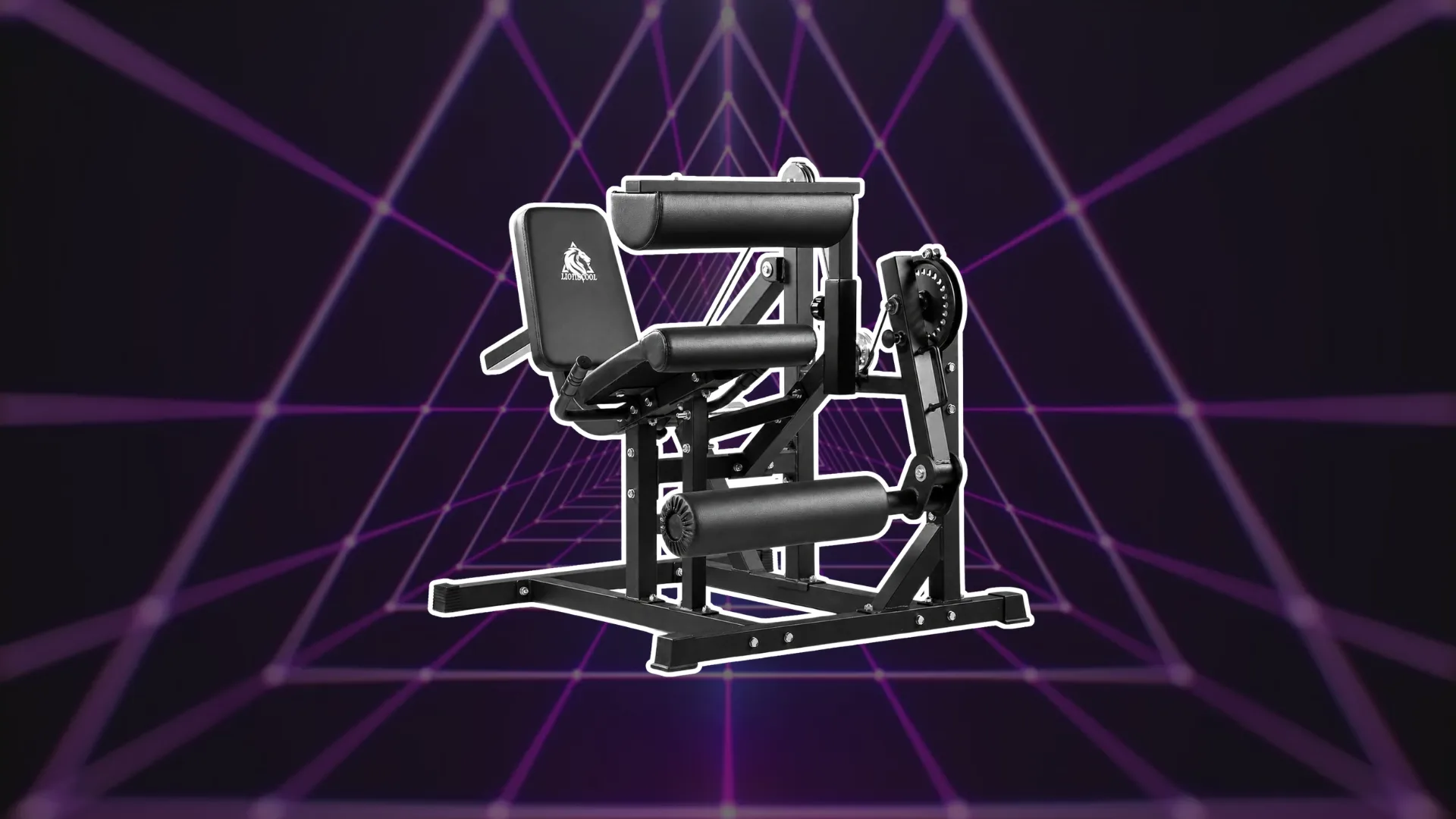
LionsCool Seated Curl Extension Machine Review
A rare, budget-friendly seated leg extension and curl machine with a consistent cam-pulley feel and one visible lever-arm flex.
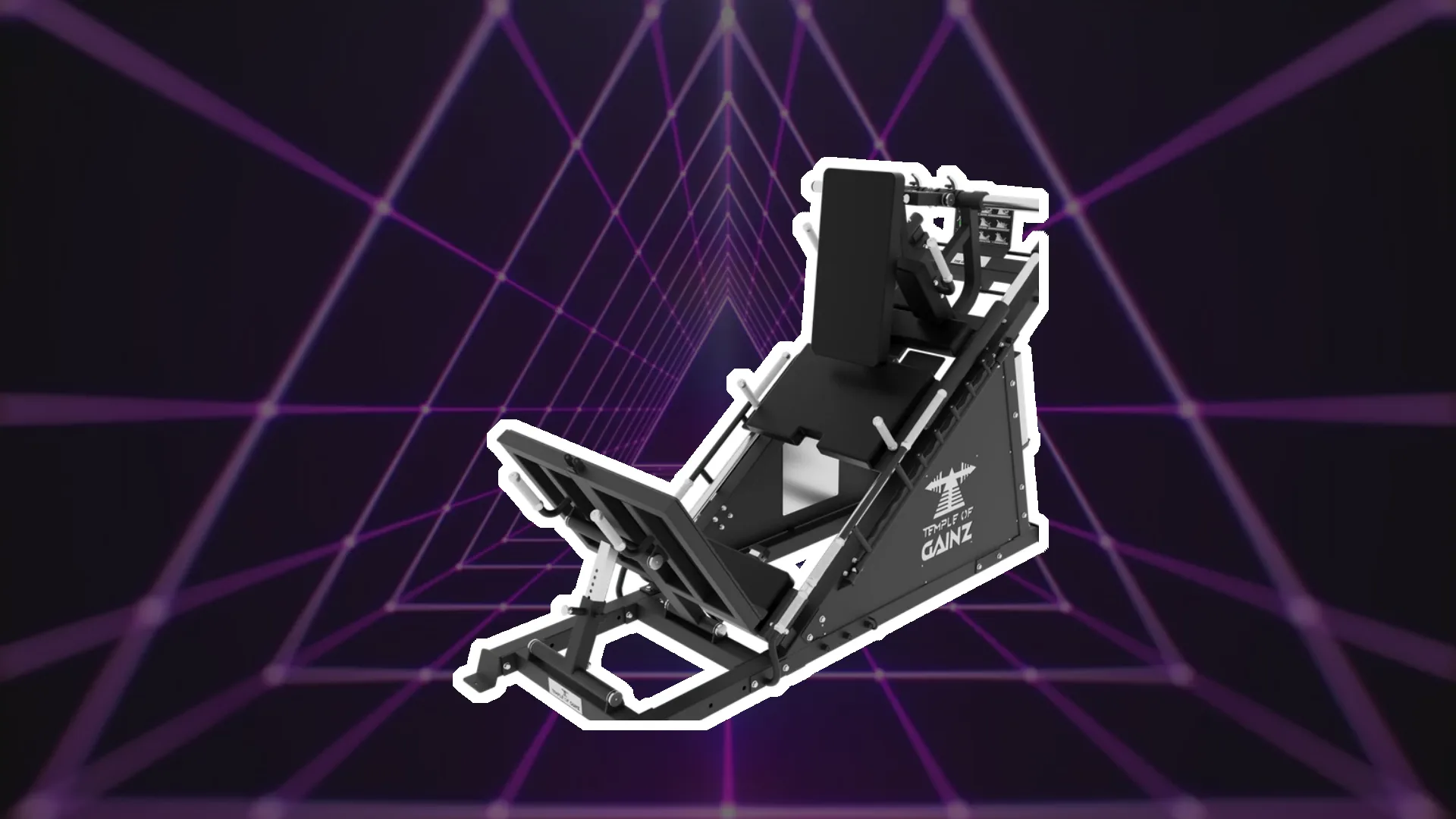
Temple of Gainz Quadsend Review
The $4,200 Quadsend is the best-built leg press hack squat combo for home gyms, period.
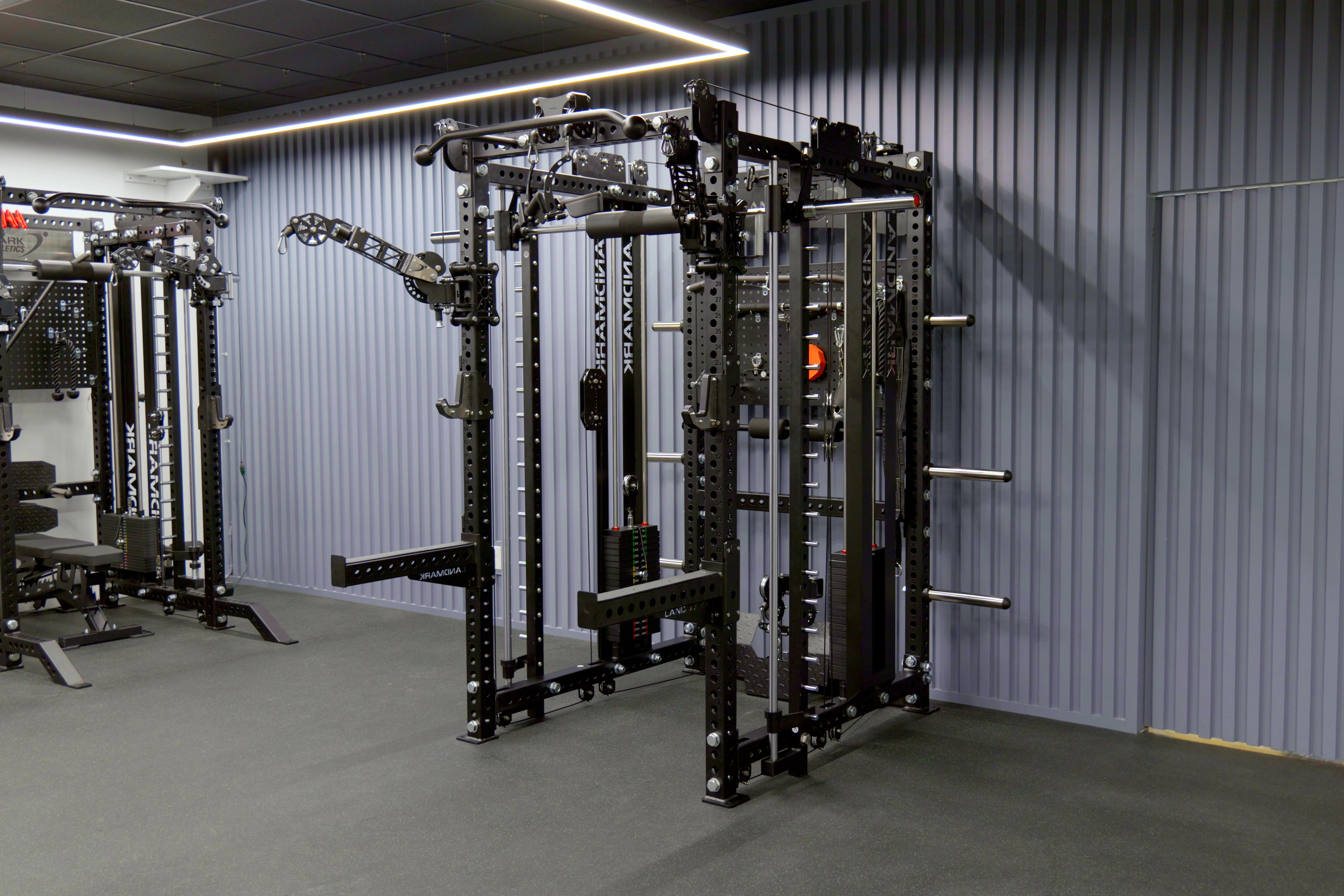
Landmark Athletics Everest All-In-One Trainer
The Everest is a complete, no-compromise all-in-one trainer built for lifters who want commercial-grade quality at home.

Mikolo Anubis 2.0 Ultimate Edition
The Anubis 2.0 fixes every real problem from the original and delivers a rack, cable machine, and Smith machine in one.
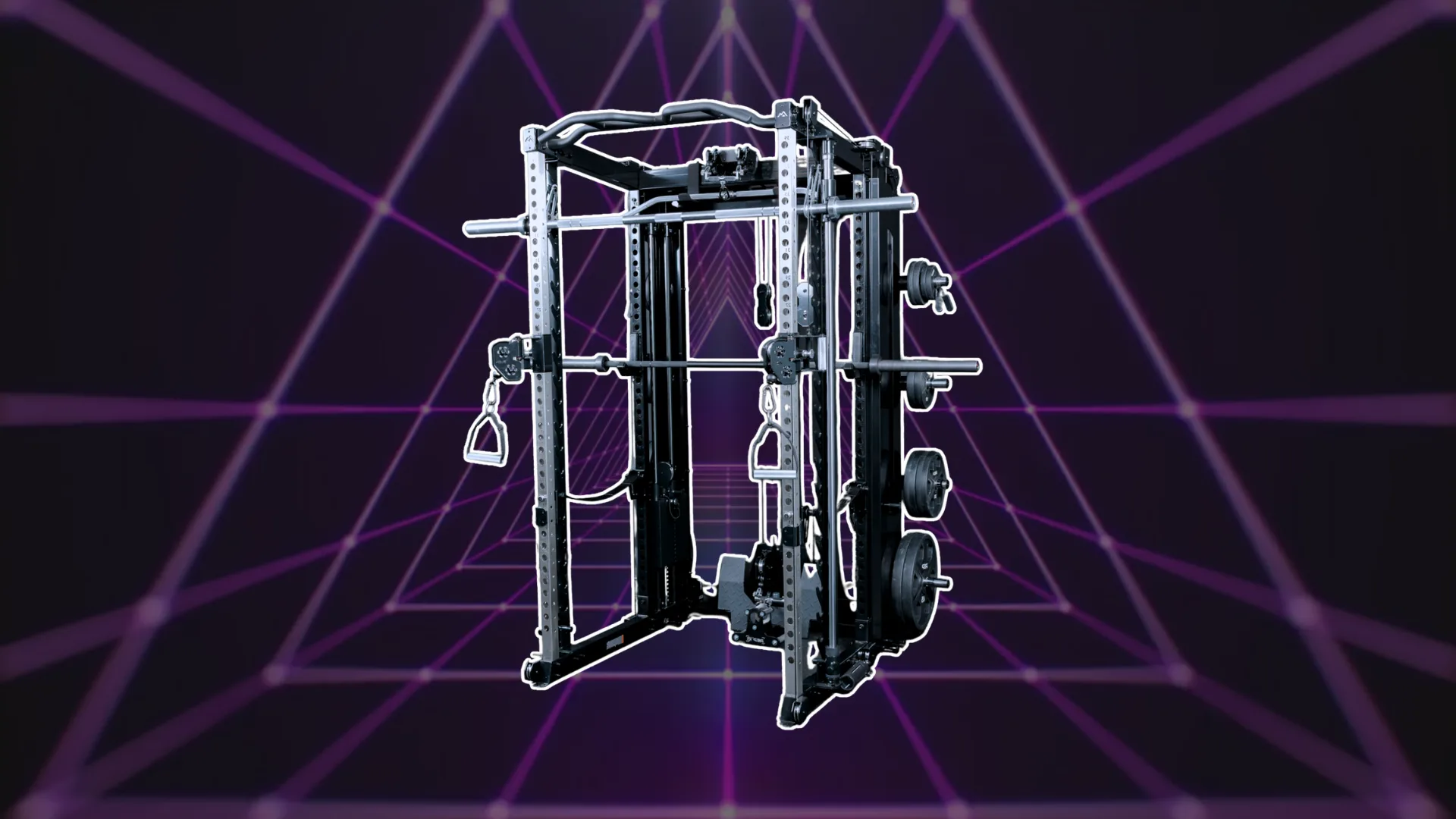
REP Fitness Altitude
The REP Altitude is the rare compact all in one that feels premium, stable, and actually fun to train on.
RitFit Buffalo Smith Machine Review
A $1,800 Smith machine with a dual cable system and a 470-pound base that won't move.